Proudly serving Tucson, Oro Valley, Marana, Vail, Sahuarita, Green Valley & surrounding areasCall or Text 24/7: +1 (520) 567-9887

Garage Floor Epoxy, Polyaspartic Coatings, and Concrete Repair in Drexel Heights, AZ

Tucson Epoxy Co. installs garage floor epoxy and concrete floor coatings for homes and businesses in Drexel Heights. Our services include polyaspartic, flake, and metallic systems as well as commercial and industrial epoxy flooring. We also coat patios and pool decks and repair or resurface concrete before a new finish is applied. Each system starts with slab preparation matched to the floor's condition and intended use.

Drexel Heights is an unincorporated Pima County community with roughly 27,749 residents and a mix of 1970s and '80s ranch-home slabs and newer construction near Irvington Road. Sonoran Desert heat, caliche soil movement, and monsoon runoff can contribute to cracking, pitting, stains, and moisture trouble. Summer days above 100 degrees and west-facing sun also make UV stability and cure timing important. We evaluate those conditions before recommending epoxy, polyaspartic, repair, or a decorative finish.

We serve the CDP, Mission Manor, Tucson Estates, Midvale Park, and properties near Ajo Highway, San Joaquin Road, and Valencia Road. Call for a free on-site estimate and a clear scope based on your slab.

★ ★ ★ ★ ★4.9/5 Average Rating - 20+ Years of Experience - Drexel Heights Epoxy Flooring Contractor Specialists - Residential & Commercial
Floor Coating Services

Epoxy Flooring Services in Drexel Heights, AZ

From core garage systems to decorative and heavy-duty coatings, each option below is matched to slab condition, sun exposure, traffic, and finish goals. Property owners comparing conditions across the Tucson basin can also review our service information for Tanque Verde, AZ .

Garage Floor Epoxy

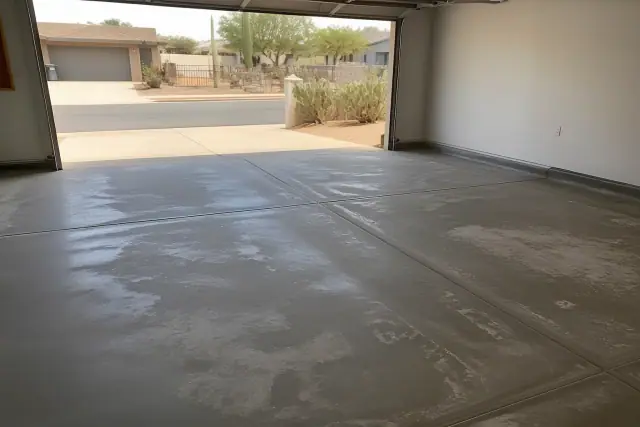
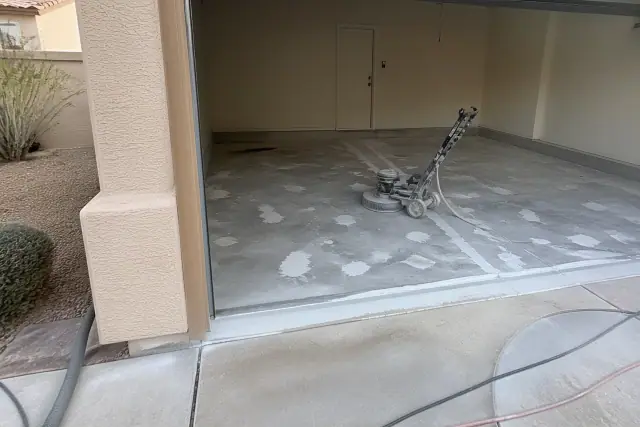
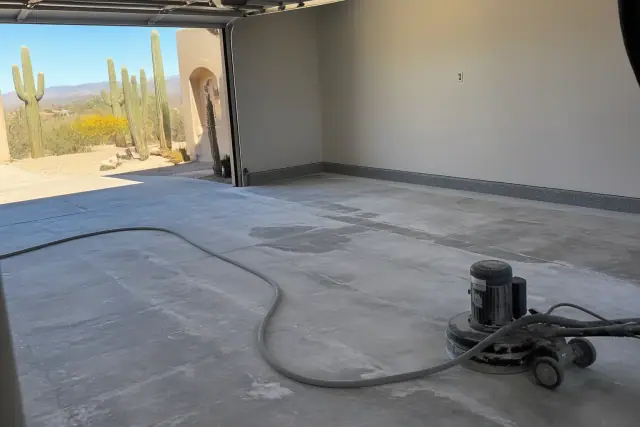
Concrete garage floor prepped for epoxy coating in a residential home in Drexel Heights, AZ.

Our core garage system begins with a moisture check and mechanical grinding, followed by primer, a pigmented epoxy base, optional broadcast media, and a protective topcoat. This multi-coat approach is built for hot tires, oil drips, and daily foot traffic. Explore Service.

Explore Service
Concrete Floor Coatings

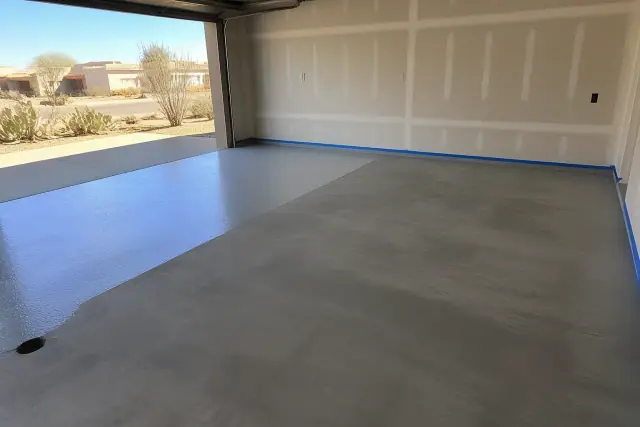
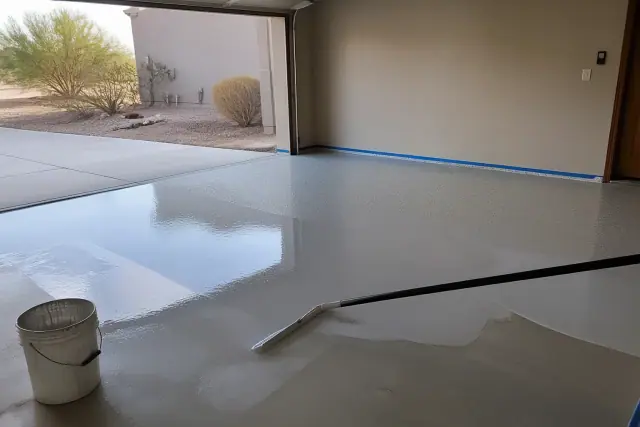
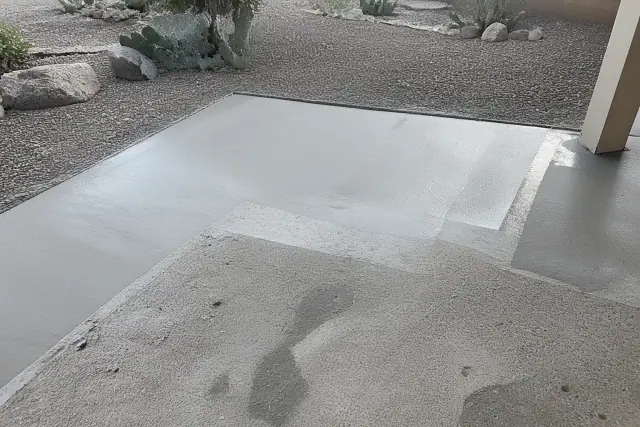
Epoxy floor coating being applied to a residential garage in Drexel Heights, AZ.

A professionally installed floor coating creates a monolithic, non-porous barrier that helps keep oil, coolant, and chemical stains from penetrating concrete. We match the coating and preparation method to the slab's condition and the way the space is used. Explore Service.

Explore Service
Polyaspartic Floor Coatings

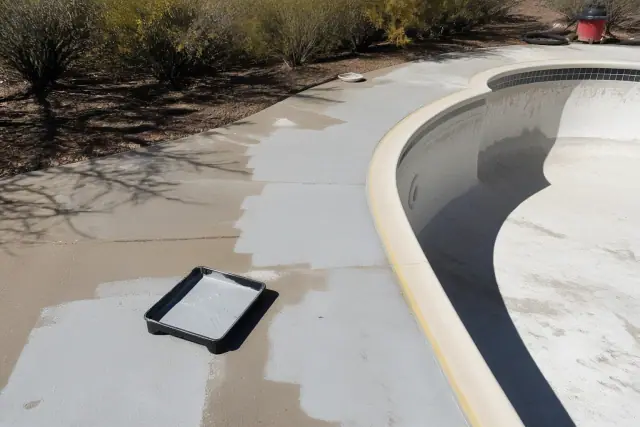
Empty two-car garage with prepped concrete floor ready for decorative flakes in Drexel Heights, AZ.

Polyaspartic coatings resist UV yellowing better than epoxy alone and cure faster in desert conditions. A polyaspartic installation can often be completed in a single day, compared with the two-to-three-day cure window traditional epoxy may need. Explore Service.

Explore Service
Commercial Epoxy Flooring

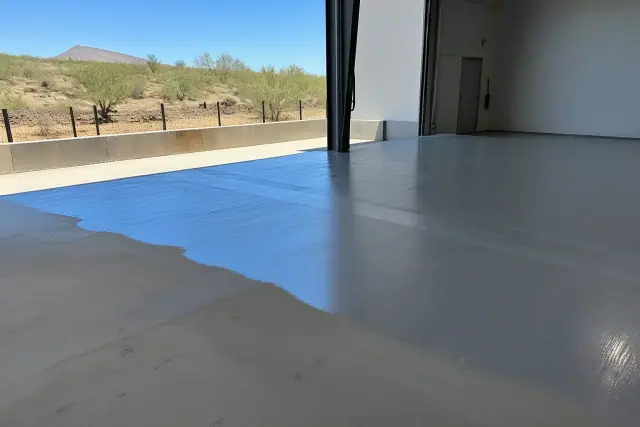
Concrete floor being coated with commercial epoxy at a warehouse loading dock in Drexel Heights, AZ.

Commercial systems use thicker mil builds and slip-resistant additives for retail floors, offices, warehouses, rolling carts, forklift traffic, and steady foot traffic. Work can be scheduled around business hours and divided into sections when the floor plan allows.

Industrial Epoxy Flooring

Empty residential two-car garage with concrete floors prepped for epoxy in Drexel Heights, AZ.

High-build epoxy and urethane cement systems are selected for chemical exposure, heavy equipment, abrasion, drainage slope, and point loads. Facility-specific planning can also account for slip resistance, ESD requirements, OSHA workplace safety standards, and off-hours installation.

Flake Epoxy Flooring

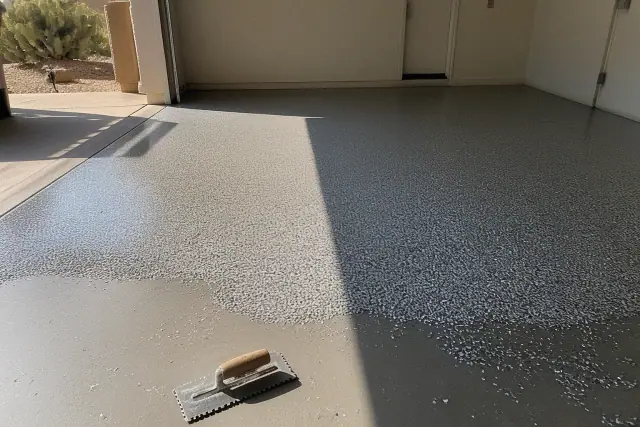
Prepped concrete garage floor with scattered epoxy flakes and a notched trowel in Drexel Heights, AZ.

Colored vinyl chips are broadcast into the base coat and sealed under a clear topcoat. The finished texture helps hide minor slab imperfections, adds slip resistance, and creates a mottled look suited to garages, workshops, showrooms, and shops.

Metallic Epoxy Flooring

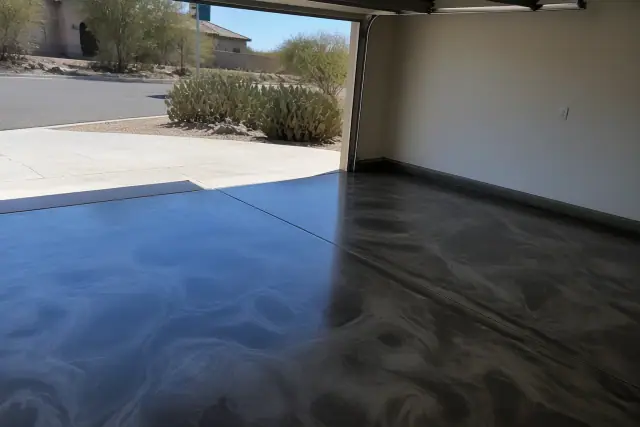
Empty two-car garage with new metallic epoxy flooring in Drexel Heights, AZ.

Mica pigments are moved through a clear or tinted epoxy base to create a three-dimensional, marbled appearance. No two pours look identical, making this finish a custom option for showroom garages, entryways, and high-end patios.

Patio Floor Coatings

Concrete backyard patio undergoing surface repair and leveling for epoxy coating in Drexel Heights, AZ.

Textured, UV-stable patio coatings are designed for direct desert sun and can reduce surface temperature compared with bare concrete. Finish selection also considers underfoot comfort, color retention, and slip resistance.

Pool Deck Coatings

Concrete pool deck undergoing epoxy coating preparation at a residential site in Drexel Heights, AZ.

Broadcast texture systems provide grip around wet pool edges while resisting constant sun and chlorine exposure. A UV-stable top layer helps the deck retain color longer than a standard acrylic concrete stain.

Concrete Repair & Resurfacing

Concrete floor prepared for epoxy resurfacing in a residential garage in Drexel Heights, AZ.

Cracks may be treated with semi-rigid epoxy injection or polyurea fillers before high spots are ground and pitted or scaled areas are resurfaced. Repairing spalls, moisture trouble, and uneven areas first gives the coating a mechanically sound surface to bond to.

Choosing a Coating

How to Choose the Right Floor Coating in Drexel Heights

The right system depends on more than color. Slab moisture, active cracks, direct sun, expected traffic, chemical contact, wet-area grip, cure time, and decorative goals all influence whether epoxy, polyaspartic, flake, metallic, or a heavier commercial build is appropriate.

Slab Condition and Moisture

A visual inspection and moisture test identify vapor risk, cracks, spalling, pitting, and low spots before materials are chosen. Moisture mitigation and repairs belong under the coating, not after a blister or bond failure appears.

Sun Exposure and Cure Time

A west-facing garage or exposed patio benefits from stronger UV stability, while a short return-to-service window may favor polyaspartic chemistry. Indoor epoxy bases can still provide adhesion and build when paired with a UV-resistant topcoat.

Traffic and Chemical Exposure

A residential garage, retail floor, warehouse aisle, and industrial work zone place different loads on a coating. Vehicle traffic, rolling carts, abrasion, point loads, oil, coolant, and facility chemicals help determine build thickness and topcoat choice.

Slip Resistance and Wet Areas

Smooth epoxy can become slippery when wet. Textured flake or a slip-resistant additive is a better fit where garages collect water or oil and where pool decks face regular splash and runoff.

Decorative Appearance

Flake blends create a practical mottled surface that disguises small imperfections, while metallic mica produces a more dramatic marbled effect. Color, texture, surrounding finishes, and the room's purpose guide the final selection.

Control Joints and Slab Movement

Caliche-heavy soil changes with monsoon moisture, so slab movement and control joints cannot be ignored. Flexible epoxy or polyaspartic formulations offer better elongation than brittle coatings, and joints should be handled correctly instead of simply covered.

Local Concrete Challenges

Common Concrete Floor Problems in Drexel Heights

Bare concrete in the Tucson basin faces heat, moving soil, water intrusion, stains, and preparation shortcuts that can shorten a coating's life. Identifying the cause before resurfacing helps prevent the same defect from showing through the finished floor.

Request Slab Inspection

Extreme Heat and Thermal Cycling

At roughly 2,300 feet elevation, Drexel Heights can see sun-exposed slab surfaces exceed 150 degrees Fahrenheit. Daily expansion and contraction can open hairline cracks and gradually widen existing ones.

Caliche Soil Movement

Caliche-heavy Pima County soil shifts as moisture levels change during monsoon season. That movement can stress slabs, widen cracks, and make flexible material selection and control-joint planning important.

Monsoon Water Pooling

Runoff can collect at garage-door thresholds and low areas near the slab edge. Sloping, patching, and resurfacing those areas before coating helps keep water from sitting against the new finish.

Moisture-Vapor Blistering

Arizona slabs can trap vapor that blisters a coating when moisture risk is missed. Testing before grinding and using a moisture-mitigating primer where conditions call for it addresses the problem below the finish.

Hot-Tire Pickup and UV Yellowing

Lower-grade epoxy may soften under hot tires or yellow after prolonged direct sunlight. Proper cure, catalyzed materials, and a polyaspartic topcoat help protect color, gloss, and the tire-contact areas of the floor.

Shortcut Surface Preparation

Rolled-on kits and acid etching may not create the mechanical bond profile a slab needs. Under-prepped DIY coatings can lift or bubble within a year or two, making diamond grinding and thorough degreasing essential.

Why Choose Us

Why Choose Tucson Epoxy Co. in Drexel Heights?

Local floor coating work requires attention to the slab beneath the finish and the desert conditions around it. Tucson Epoxy Co. combines Drexel Heights slab knowledge, Arizona contractor licensing, mechanical preparation, and material selection based on moisture, sunlight, traffic, and use.

Local Slab Knowledge

Drexel Heights slabs poured before the 1990s may have a different aggregate mix and thinner base than current Pima County building code requires. Experience removing failed coatings from older local slabs helps guide repair, joint work, and preparation.

Arizona Contractor Licensing

Tucson Epoxy Co. carries the licensing required to operate as a contractor in Arizona under the Arizona Registrar of Contractors. Commercial project planning also accounts for applicable permit requirements administered through Pima County Development Services.

Mechanical Grinding and Material Selection

Every coated slab is mechanically ground rather than relying on acid etching alone. Epoxy build, crack filler, broadcast media, and topcoat chemistry are then selected for the floor's sun exposure, movement, traffic, moisture, and finish goals.

Professional Installation

Our Garage Floor Coating Process in Drexel Heights

A durable floor is built through a sequence of inspection, mechanical preparation, repair, coating, and controlled cure. Each step is adjusted to the slab and selected system rather than treated as a one-size-fits-all application.

01.

Moisture Test and Slab Inspection

The process begins with a moisture test and visual inspection for cracks, spalls, pitting, stains, low spots, and active movement. These findings define the repair and coating scope.

02.

Diamond Grinding and Cleaning

Diamond grinding opens the concrete pore structure for mechanical bonding. The slab is then vacuumed and degreased so dust, oil, and residue do not interfere with adhesion.

03.

Crack Repair and Moisture Mitigation

Cracks, spalling, and pitting are filled or resurfaced, and low areas may be corrected where runoff collects. A moisture-mitigating primer is applied when slab conditions call for it.

04.

Pigmented Epoxy Base Coat

The pigmented epoxy base is installed at the correct mil thickness for the chosen system. This layer provides adhesion, build, color, and a foundation for decorative media or the final topcoat.

05.

Decorative Broadcast or Metallic Finish

Vinyl flake is broadcast for texture and a mottled look, or metallic pigment is manipulated for a marbled effect when that finish is selected. Solid-color systems move directly to the protective topcoat.

06.

Topcoat, Cure, and Care Walkthrough

A polyaspartic or epoxy topcoat adds UV and chemical resistance before the cured floor is inspected and care instructions are reviewed. Most two-car garages are ready to walk on within 24 hours and drive on within about 72 hours, with faster timing possible for a polyaspartic topcoat system.

Practical Results

Coating Outcomes for Drexel Heights Homes & Businesses

Case Study 1: Garage and Workshop Floors: A properly installed epoxy or polyaspartic system creates a finished, non-porous surface suited to vehicles, tools, oil drips, and regular foot traffic.

Case Study 2: Commercial and Industrial Areas: Thicker builds, chemical resistance, drainage planning, and segmented work zones help match the floor to ongoing operations without treating a facility like a residential garage.

Case Study 3: Finished-Space Value: Industry data on professionally installed systems indicates that return on investment can reach 500 to 1,100 percent compared with bare concrete, depending on the property and finished floor.

Plan Your Project

Schedule a Free
On-Site
Estimate

Tell us how the floor is used, the condition of the slab, and the finish you have in mind. Tucson Epoxy Co. will inspect the site and provide an itemized estimate that explains preparation, materials, decorative options, and the expected cure window.

Epoxy Flooring Help

FAQs About Garage Floor Epoxy in Drexel Heights, AZ

These answers cover cost, preparation, heat, cure time, finishes, repairs, and service coverage for Drexel Heights epoxy flooring projects. A site inspection is still the best way to match the system to a specific slab.

Call Our Experts

Professional installation typically runs $2 to $12 per square foot including materials and labor. Most residential garage projects in the Tucson area fall in the $4 to $9 per square foot range, depending on preparation, system type, and decorative options.

A standard two-car garage of roughly 400 to 500 square feet typically costs $2,000 to $4,500 for a quality epoxy system. Premium polyaspartic, flake, or metallic systems may run closer to $4,500 to $7,000, while concrete repair or moisture mitigation can add to the baseline.

Epoxy can become slippery when wet unless the topcoat includes textured flake or a slip-resistant additive. It is also less flexible than polyaspartic or polyurea, so active slab movement can show through when cracks and joints are not handled correctly.

Polyaspartic and polyurea generally provide better UV stability, cure speed, and flexibility than straight epoxy. A hybrid system can use epoxy for adhesion and build, then add a polyaspartic topcoat for color retention and durability.

A properly prepared and installed residential system typically lasts 15 to 20 years under normal use. Cheaper DIY or improperly ground installations may fail within 3 to 5 years because peeling, UV exposure, heat cycling, and slab moisture shorten service life.

Correctly installed epoxy and polyaspartic coatings can handle Arizona summer heat, but direct sun and hot tires make material quality important. Polyaspartic topcoats resist UV yellowing and degradation better than standard epoxy exposed to the same thermal load.

Yes. The slab should be moisture-tested, diamond-ground, vacuumed, degreased, and repaired before primer or base coat is installed. Acid etching alone often does not open the pore structure enough for the mechanical bond a durable system needs.

Follow the care instructions provided after the cured floor is inspected. Use compatible cleaning products, address oil or chemical spills promptly, and avoid practices that can contribute to hot-tire pickup on darker coatings.

Polyaspartic cures faster, resists UV yellowing better, and offers more flexibility than straight epoxy. Epoxy still provides strong adhesion and build, which is why a hybrid epoxy-base and polyaspartic-topcoat system is often recommended.

Flake flooring adds texture, disguises minor imperfections, and gives garages or workshops a practical mottled finish. Metallic epoxy creates a custom three-dimensional marbled effect that is often chosen for showroom garages, entryways, and high-end patios.

It can be coated after the damaged areas are properly evaluated and repaired. Cracks may need semi-rigid epoxy injection or polyurea filler, while spalled, pitted, or scaled areas may require grinding and resurfacing before the coating is applied.

Yes. Commercial systems can be configured for retail, office, and warehouse traffic, while industrial builds address heavy equipment, abrasion, chemical exposure, drainage, and facility-specific ESD needs. Work zones and off-hours scheduling can help reduce disruption.

Textured, UV-stable coatings can be installed on patios and pool decks exposed to desert sun. Pool areas benefit from broadcast texture for wet-edge grip and materials selected for ongoing chlorine and sunlight exposure.

Regular coverage includes Drexel Heights, Tucson Estates, Valencia West, Midvale Park, Pascua Yaqui Tribal lands bordering the area, South Tucson, Sahuarita, Vail, Green Valley, Marana, and Oro Valley. Larger commercial and industrial projects may be scheduled across a wider radius.

The on-site review considers slab condition, preparation, repairs, moisture mitigation, coating type, decorative finish, and project size. The itemized estimate explains which preparation steps and materials are driving the price before work begins.