Proudly serving Tucson, Oro Valley, Marana, Vail, Sahuarita, Green Valley & surrounding areasCall or Text 24/7: +1 (520) 567-9887

Garage Floor Epoxy and Concrete Flooring Installation in Vail, AZ

Tucson Epoxy Co. installs garage floor epoxy, concrete floor coatings, and polyaspartic floor coatings for homeowners and businesses in Vail, Arizona. Our services also include commercial and industrial epoxy flooring, decorative flake and metallic finishes, patio and pool deck coatings, and concrete repair and resurfacing. We match the coating system to the slab's condition, sun exposure, traffic, and intended use. Every installation begins with preparation designed to create a strong mechanical bond.

Vail's caliche-heavy soil, intense UV, low humidity, monsoon moisture, and day-to-night temperature swings can leave concrete cracked, dusty, stained, or spalling. Slabs without effective vapor barriers may also push moisture toward the surface and undermine a coating. We inspect those conditions before recommending standard epoxy, a UV-stable polyaspartic topcoat, or repair and resurfacing. That evaluation helps the finished floor suit the property instead of relying on a one-size-fits-all kit.

Vail lies 24 miles southeast of Tucson, where summer slab temperatures regularly climb past 130 degrees and winter nights can dip below freezing. Our Vail-area service reaches Corona de Tucson, Rita Ranch, Civano, Sahuarita, Del Webb Rancho Sahuarita, and the Colossal Cave Road corridor.

★ ★ ★ ★ ★4.9/5 Average Rating - 20+ Years of Experience - Vail Epoxy Flooring Contractor Specialists - Residential & Commercial
Epoxy Flooring Services

Floor Coating Services in Vail, AZ

Vail grew from 2,484 residents in 2000 to more than 10,000 today, creating a mix of new-build garages and older slabs that need restoration before coating. Choose a service based on the space, surface condition, sun exposure, and traffic. Tucson Epoxy Co. also provides floor-coating service in Sahuarita, AZ .

Garage Floor Epoxy

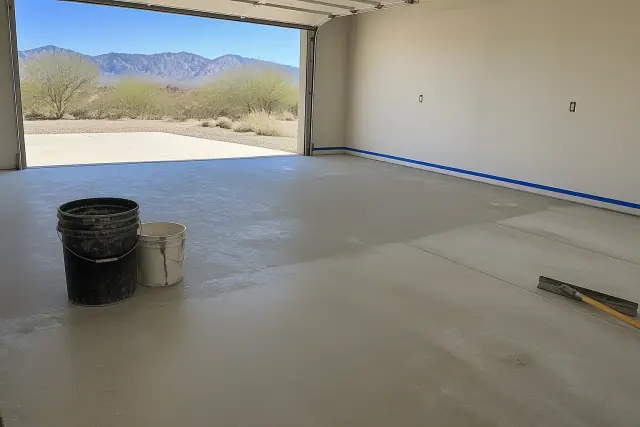
Empty residential garage floor in Vail, AZ prepared for epoxy coating with mixing buckets and taped baseboards.

Two-component epoxy systems protect 1-car, 2-car, 3-car, and oversized 4-car residential garages with solid-color or full color-flake finishes. Each project includes concrete grinding, crack repair, and moisture testing before coating.

Explore Service

Concrete Floor Coatings

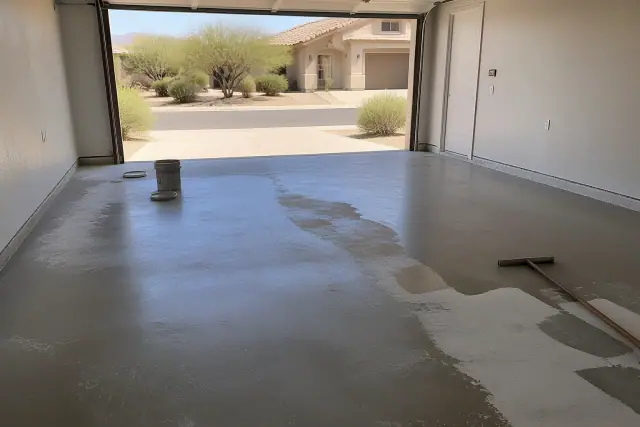
Concrete floor being prepped for an epoxy coating inside a residential two-car garage in Vail, AZ.

Concrete floor coatings seal dusty or stained slabs and create a cleanable surface for garages, showrooms, service bays, patios, and other supported spaces. The system is selected around abrasion, chemical exposure, vehicle traffic, and direct sunlight.

Explore Service

Polyaspartic Floor Coatings

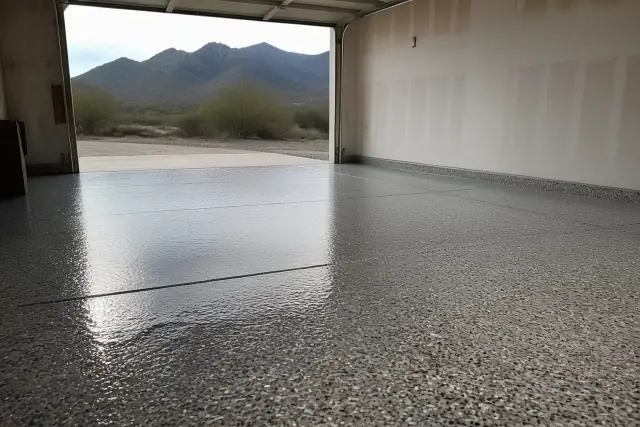
Freshly applied polyaspartic floor coating with vinyl flakes on a residential garage floor in Vail, AZ.

UV-stable polyaspartic coatings resist yellowing better than standard epoxy on sun-exposed floors. A polyaspartic surface can often accept foot traffic within 24 hours and vehicle traffic within 48 to 72 hours.

Explore Service

Commercial Epoxy Flooring

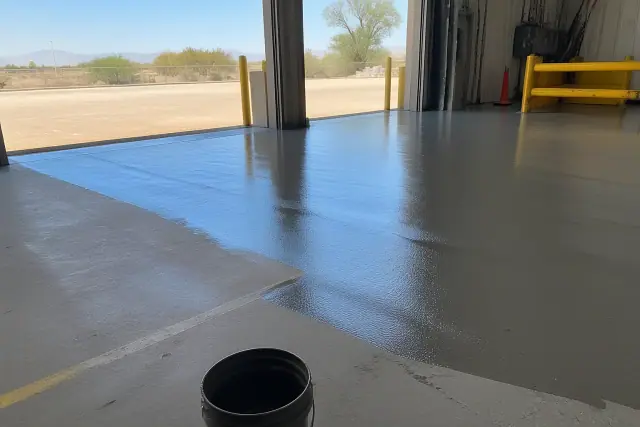
Freshly applied commercial epoxy flooring on a warehouse loading dock in Vail, AZ.

Commercial epoxy systems support retail floors, offices, showrooms, warehouses, and service bays exposed to foot traffic, forklift wheels, chemicals, and pressure washing. Installations are matched to ASTM D4541 adhesion standards and can be scheduled around business hours when possible.

Industrial Epoxy Flooring

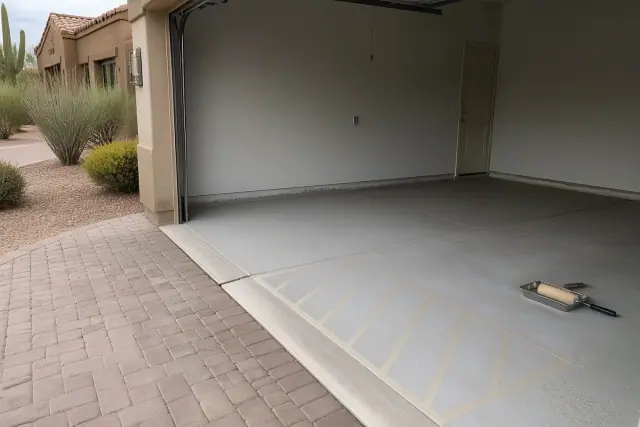
Two-car garage in Vail, AZ prepped for industrial epoxy flooring with paint rollers and stenciled hazard zone.

High-build epoxy and polyurea-polyaspartic hybrid systems are designed for heavy point loads, thermal cycling, oils, solvents, and battery acid in mechanical and agricultural facilities. Surface preparation follows ICRI concrete surface profile guidelines for a durable mechanical bond.

Flake Epoxy Flooring

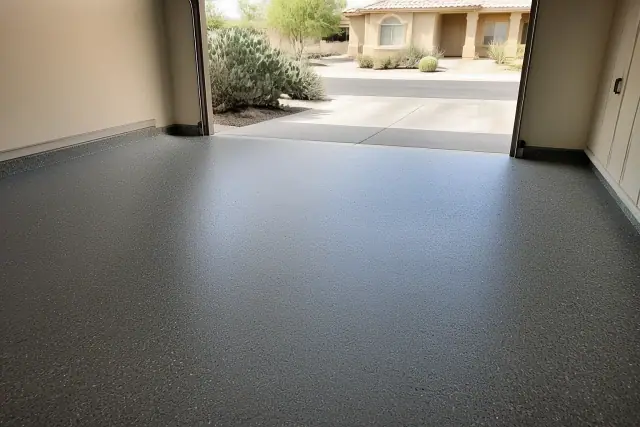
Concrete floor with decorative epoxy flakes inside a residential garage in Vail, AZ.

Color chips can be broadcast to full saturation or partial coverage, hiding minor visual imperfections while adding texture. Neutral desert tones and custom blends create practical garage, patio, and pool-surround finishes.

Metallic Epoxy Flooring

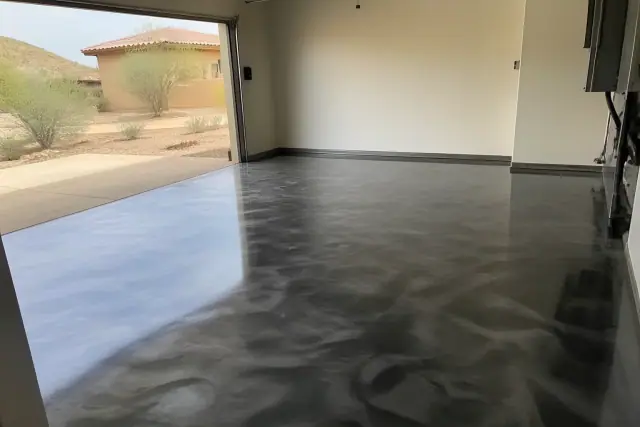
Metallic epoxy flooring with a swirling resin texture in a residential garage in Vail, AZ.

Mica pigments suspended in clear epoxy form a unique marbled, three-dimensional finish for showroom garages, home bars, and entryways. A polyaspartic or polyurethane topcoat adds UV and abrasion resistance.

Patio Floor Coatings

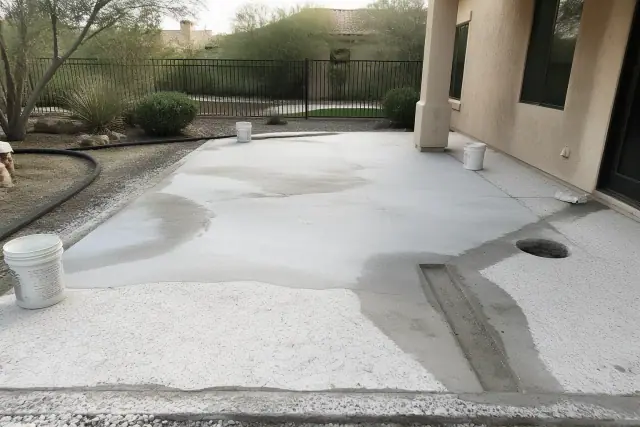
Concrete patio floor being leveled for epoxy coating at a residential backyard in Vail, AZ.

Patios receive UV-stable polyaspartic or polyurea coatings instead of interior epoxy that can yellow and chalk outdoors. Textured finishes add wet-surface traction while sealing concrete against monsoon moisture and efflorescence over caliche subsoil.

Pool Deck Coatings

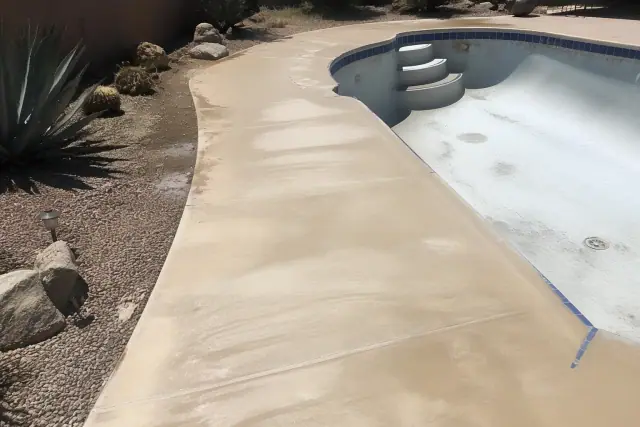
Drained swimming pool deck with concrete surfaces ready for sealant in Vail, AZ.

Light-colored, textured pool deck coatings improve traction and heat reflectivity while resisting chlorine and mineral staining. These systems can bridge hairline cracks near pool coping, and installation typically takes one to two days depending on size and detail work.

Concrete Repair & Resurfacing

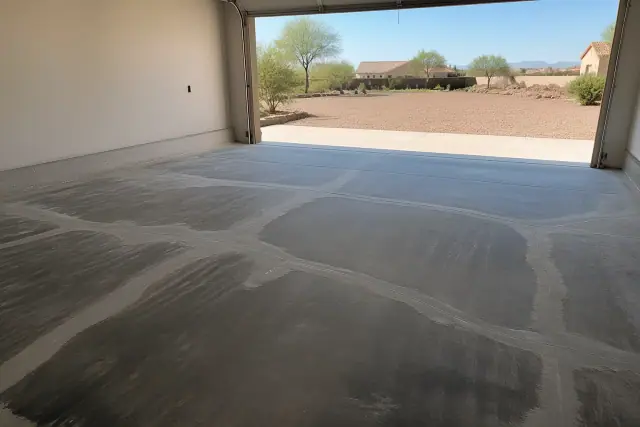
Empty two-car residential garage floor with crack repairs and sanding prep in progress in Vail, AZ.

Peeling coatings, spalled areas, and pitted concrete require restoration before recoating. The crew removes failed material, patches damage with polymer-modified repair mortar, and re-profiles the slab for fresh epoxy or polyaspartic coating.

Coating Selection

How to Choose a Floor Coating for Vail Concrete

The right coating depends on whether the slab is indoors or exposed, how quickly the space must return to use, the desired finish, and how much repair is needed. A slab assessment helps compare standard epoxy, polyaspartic, polyurea, flake, and metallic options without overlooking moisture or surface-preparation needs.

Choose the Coating Chemistry

Standard two-component epoxy offers strong chemical and abrasion resistance for garages with limited direct sun. Polyaspartic or polyurea topcoats add faster curing and better UV stability for exposed areas.

Match the Coating to the Space

Residential garages may prioritize appearance and hot-tire resistance, while commercial and industrial floors must account for forklifts, pressure washing, heavy equipment, and chemicals. Exterior patios and pool decks need UV stability and texture.

Test the Slab Before Coating

Cracks, prior coatings, moisture content, and surface profile affect what can bond reliably. Moisture vapor testing may follow ASTM F1869 when slab age or history calls for it, before grinding and repairs begin.

Plan for Outdoor Traction

Patios and pool surrounds can become slippery during monsoon weather or routine washing. A textured finish or flake broadcast adds traction without relying on a smooth interior-grade coating outdoors.

Choose the Finish

Solid colors create a clean uniform surface, flake blends conceal minor visual imperfections, and metallic pigments produce a marbled showpiece. The finish should fit both the design goal and the floor's traffic.

Compare Cure Time and Cost

A typical 2-car garage runs $2,000 to $4,500 for a standard system, while premium polyaspartic topcoat systems may run $4,500 to $7,000. Square footage, slab condition, finish complexity, and the required return-to-service window shape the final quote.

Vail Concrete Issues

Common Floor-Coating Problems on Vail Properties

Concrete at roughly 3,200 feet in Vail faces intense sun, cold winter nights, monsoon moisture, and expansive caliche-heavy soil. Identifying the cause of cracks, peeling, stains, or surface dusting determines whether the slab needs repair, moisture mitigation, or a different coating chemistry.

Request Slab Assessment

Cracks and Spalling

Temperature movement between a 100-plus-degree summer afternoon and a 40-degree winter night can stress unsealed concrete. Cracks, pitting, and spalled areas must be repaired and re-profiled before coating.

Moisture Vapor and Efflorescence

Caliche-heavy soil drains poorly, and slabs without effective vapor barriers can move moisture upward. Moisture emission or efflorescence can weaken adhesion unless it is identified before the coating system is selected.

UV Yellowing and Chalking

Standard interior epoxy can amine-yellow or chalk under prolonged desert sun. West- and south-facing garage openings, patios, and other exposed areas benefit from UV-stable polyaspartic or polyurea topcoats.

Slippery Wet Surfaces

Smooth coatings can become slick when wet, especially on pool decks and patios. Flake broadcasts and textured additives improve traction for surfaces exposed to water, sand, and dust.

Peeling DIY Coatings

Thin, water-based kits applied without grinding or moisture testing may peel or delaminate within two to three years. Failed material has to be removed so the replacement coating bonds to properly prepared concrete.

Chemical and Mineral Stains

Garage oils, solvents, battery acid, pool chlorine, and minerals can discolor or attack unprotected concrete. The coating chemistry and topcoat should reflect the exposures expected in that specific space.

Why Choose Us

Why Choose Tucson Epoxy Co. in Vail?

Tucson Epoxy Co. combines familiarity with Vail-area slabs, current Arizona Registrar of Contractors licensing, standards-based preparation, and an installation crew that is not subcontracted. Each property is walked before quoting, and needed repair or resurfacing is explained before work begins.

Local Concrete Experience

Experience across Rita Ranch and Del Webb garages, Colossal Cave Road commercial bays, and the greater Vail corridor informs recommendations for different slab ages, pour quality, soil conditions, and exposure.

Standards-Based Preparation

Surface profiles follow ICRI guidance, commercial bond performance is matched to ASTM D4541, and moisture testing follows ASTM F1869 when needed. These checks support coating adhesion on aged or uncertain slabs.

In-House Installation and Clear Quotes

The company's own crew performs preparation and installation, removes old coating debris, and completes a final walkthrough. The quote identifies the slab work and coating system so the installed scope is clear before the project starts.

Installation Process

Our Epoxy Flooring Process in Vail

A durable coating starts with evaluation and surface preparation, not the first coat of resin. The six-step process moves from a property walkthrough through documented final inspection so slab conditions and finish expectations are addressed in sequence.

01.

Walkthrough and Quote

The crew walks the property, measures the floor, discusses use and finish goals, and explains whether repair or resurfacing appears necessary. The quote reflects the observed slab and selected system.

02.

Slab and Moisture Assessment

Cracks, joints, prior coatings, moisture content, and the overall surface profile are checked. Moisture vapor testing is added when the slab's age or history indicates it is needed.

03.

Diamond Grinding

Diamond grinding opens the concrete pores, removes weak surface material, and creates the profile needed for mechanical adhesion. Failed prior coatings are ground away rather than covered.

04.

Crack and Surface Repair

Cracks and joints are repaired, while pitted or spalled areas receive polymer-modified repair mortar. The restored surface is re-profiled before coating.

05.

Multi-Coat Application

The selected system may include primer, base color, decorative flake or metallic pigment, and a clear topcoat applied to manufacturer specifications. Standard epoxy needs about 24 hours before light foot traffic and up to a week before heavy vehicle loads.

06.

Final Inspection and Documentation

The finished surface is checked for even coverage, proper decorative distribution, full cure, bubbles, thin spots, and edge issues. The coating system and materials are documented before the final walkthrough.

Expected Outcomes

Floor-Coating Outcomes for Vail Properties

Case Study 1: Garage restoration: Removing a failed kit, patching spalled areas, and re-profiling the slab creates a sound base for a bonded epoxy or polyaspartic system.

Case Study 2: Sun-exposed patios and pool decks: UV-stable topcoats, lighter colors, and textured finishes address yellowing, surface heat, and wet-weather traction.

Case Study 3: Commercial and industrial floors: High-build systems prepared to recognized surface-profile and adhesion standards support easier cleaning, better reflectivity, and resistance to demanding traffic and chemicals.

Plan Your Project

Schedule a Vail
Floor-Coating
Consultation

Request a property walkthrough to review the slab, compare coating options, and receive a quote based on actual square footage, condition, preparation, and finish. Call to discuss a garage, patio, pool deck, commercial floor, or industrial project in the Vail area.

Vail Epoxy Help

FAQs About Epoxy Flooring in Vail, AZ

These answers cover pricing, cure times, preparation, outdoor use, maintenance concerns, and coating choices for Vail properties. A walkthrough is still needed to confirm slab condition and the right project scope.

Call Our Epoxy Team

Professional garage floor epoxy typically runs $7 to $12 per square foot installed, including materials, grinding, crack repair, and labor. Materials alone range from about $2 to $6 per square foot, while the final installed price depends on slab condition and system choice.

A typical 2-car garage of 400 to 500 square feet usually costs $2,000 to $4,500 for a standard epoxy system. Premium systems with a polyaspartic topcoat may run $4,500 to $7,000 depending on slab condition, preparation, and finish complexity.

Standard epoxy can yellow under prolonged UV exposure, needs a dry and properly ground slab, and can be slippery when wet without texture. It also cures more slowly than polyaspartic coatings, and an aged or sun-faded repair may be difficult to color-match perfectly.

A properly installed residential epoxy floor typically lasts 15 to 20 years under normal use. Preparation quality, moisture conditions, direct sun, hot tires, and heavy tools all influence where a floor falls within that range.

A 20x20 garage is 400 square feet. At the typical installed range, a standard system is roughly $2,800 to $4,800, while premium finishes or extensive crack repair can increase the total.

Coating an existing sound garage slab is generally treated as a surface finish and typically does not require a separate Pima County permit. Structural concrete repair, slab replacement, or work tied to a larger remodel may fall under county review.

Standard epoxy generally needs about 24 hours before light foot traffic and up to a week before heavy vehicle loads. A polyaspartic system can often be walked on within 24 hours and driven on within 48 to 72 hours.

Preparation starts with a slab assessment for cracks, prior coatings, moisture, and surface profile. Diamond grinding, crack and joint repair, and moisture testing are completed before primer, base coat, decorative layer, and topcoat are applied.

Yes, but the failed coating should be ground off rather than covered. Spalled or pitted areas are patched with polymer-modified repair mortar, and the concrete is re-profiled so the new system can bond.

UV-stable polyaspartic or polyurea systems are preferred over standard interior epoxy for direct sun. Textured, lighter-colored finishes add wet-surface traction, improve heat reflectivity, and resist chlorine and mineral staining.

Flake flooring hides minor visual imperfections and can add traction with partial or full chip broadcast. Metallic epoxy uses mica pigments for a marbled, three-dimensional appearance and is best suited to spaces where a showpiece finish is the priority.

Caliche-heavy soil can limit drainage, and a slab without an effective vapor barrier may move moisture upward. Testing helps identify emission conditions that could cause peeling or delamination before a coating is installed.

Commercial systems can be designed for foot traffic, forklifts, chemicals, and pressure washing, while high-build industrial systems address heavy point loads, oils, solvents, and battery acid. Preparation can follow ICRI surface-profile guidance and ASTM D4541 adhesion standards.

Service extends across Vail, Corona de Tucson, Rita Ranch, Civano, Sahuarita, southeast Tucson, and the broader Pima County area. The draft also identifies the Colossal Cave Road corridor and properties near Houghton Road and Old Vail Road.

Two-component epoxy offers strong abrasion and chemical resistance for normal residential garage use. Parking hot tires and dragging heavy tools without protective mats can shorten service life, so system choice and everyday care still matter.