Proudly serving Tucson, Oro Valley, Marana, Vail, Sahuarita, Green Valley & surrounding areasCall or Text 24/7: +1 (520) 567-9887

Garage Floor Epoxy and Concrete Coating Installation in Oro Valley, AZ

Tucson Epoxy Co. installs garage floor epoxy, concrete floor coatings, and polyaspartic floor coatings for Oro Valley homes and businesses. Our work also covers commercial and industrial epoxy flooring, decorative flake and metallic finishes, patios, pool decks, and concrete repair and resurfacing. We assess each slab before recommending a two-component epoxy system or polyurea-polyaspartic hybrid. That gives every project a coating plan based on the surface and how the space will be used.

Oro Valley slabs face decomposed granite dust, monsoon moisture, caliche-heavy soil, and exposed surface temperatures that regularly climb past 140 degrees. Those conditions can drive vapor through concrete, soften lower-grade coatings, and weaken adhesion after repeated thermal cycling. We start with a slab assessment, mechanical diamond grinding, and moisture testing instead of covering cracks or contamination. Request a free estimate to review the prep, finish, and cure schedule that fit your floor.

From established neighborhoods off Oracle Road to newer Rancho Vistoso developments, Oro Valley includes multiple eras of slab construction. The town has grown to more than 47,000 residents since its incorporation in 1974, so surface conditions can differ considerably from one property to the next. We evaluate the actual concrete before defining the project scope.

★ ★ ★ ★ ★4.9/5 Average Rating - 20+ Years of Experience - Oro Valley Epoxy Flooring Contractor Specialists - Residential & Commercial
Epoxy Services

Floor Coating Services in Oro Valley, AZ

Choose a coating around the slab condition, traffic, sun exposure, moisture risk, and finish you want. We serve Oro Valley neighborhoods and commercial corridors, with projects also extending to Catalina, the Tucson foothills, and nearby Marana, AZ .

Garage Floor Epoxy

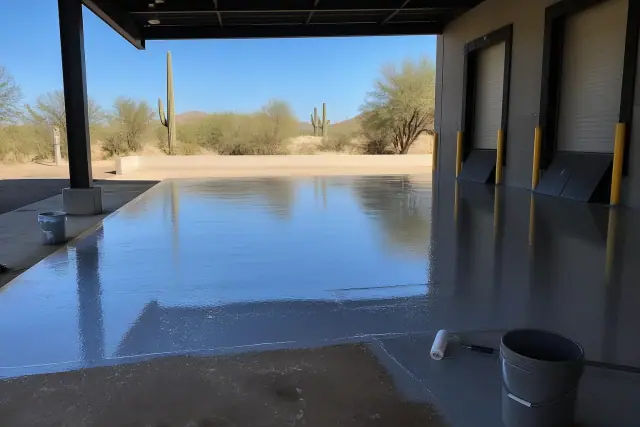
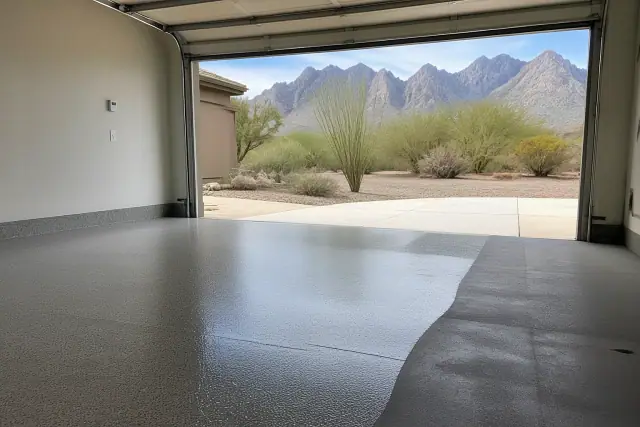
Empty two-car garage with a partially applied epoxy floor finish and view of Pusch Ridge in Oro Valley, AZ.

High-build garage systems protect two-car and three-car slabs from vehicle traffic, dropped tools, hot-tire pickup, and tracked-in monsoon mud. Each installation begins with moisture and adhesion checks, then can include a base coat, full or partial broadcast media, and a traffic-rated topcoat.

Explore Service
Concrete Floor Coatings

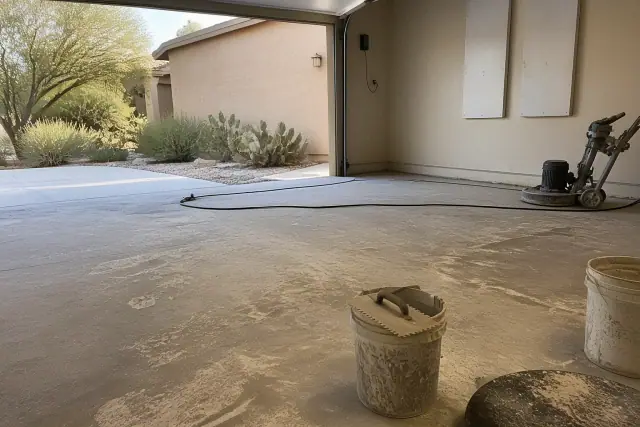
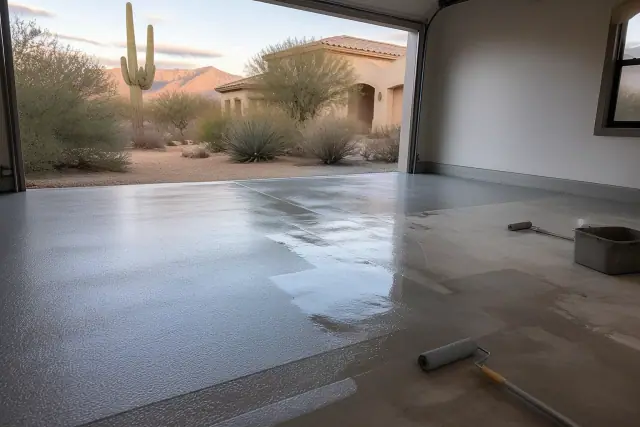
Concrete garage floor prepared for epoxy coating in an Oro Valley, AZ residential garage.

Concrete coatings create a finished, walkable surface in workshops, sunrooms, basements, and other interior spaces. We select the coating chemistry around foot traffic, occasional vehicle or equipment weight, moisture, staining, efflorescence, and concrete dusting.

Explore Service

Polyaspartic Floor Coatings

Freshly applied polyaspartic floor coating with flake texture in a residential garage in Oro Valley, AZ.

Polyurea-polyaspartic coatings cure faster and resist UV yellowing better than standard epoxy. They are useful for garages, facilities, and outdoor surfaces where direct desert sun or a shorter return-to-use window makes the topcoat choice especially important.

Explore Service

Commercial Epoxy Flooring

Concrete warehouse floor with mixing buckets and rollers during an epoxy coating project in Oro Valley, AZ.

Commercial systems serve retail buildouts, office lobbies, and showrooms along Oracle Road and near Oro Valley Marketplace. We coordinate around operating hours and provide a written scope covering square footage, coating build thickness, and the cure schedule so a business can plan access without a full week of shutdown.

Industrial Epoxy Flooring

Empty two-car garage with prepped concrete floor, tools, and view of desert landscape in Oro Valley, AZ.

Warehouses, distribution spaces, and light manufacturing floors need higher-build coatings for forklift traffic, loading, and chemical exposure. Resin and broadcast choices can account for gas, oil, brake fluid, cleaning chemicals, and wet conditions, including quartz or aggregate when added traction is appropriate.

Flake Epoxy Flooring

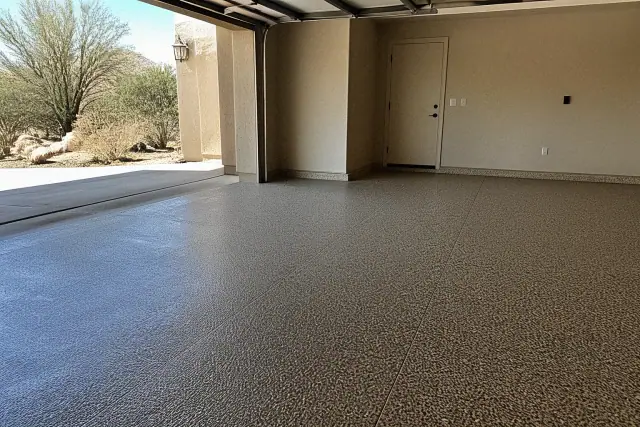
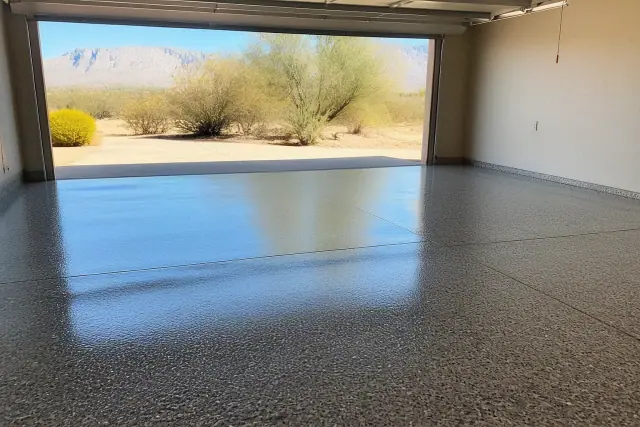
Freshly applied flake epoxy flooring in a two-car residential garage in Oro Valley, AZ.

Vinyl color chips can be broadcast to full or partial coverage, helping disguise tire marks, minor slab imperfections, and routine wear. A clear topcoat seals the flake into an easy-to-clean surface while the broadcast adds texture underfoot.

Metallic Epoxy Flooring

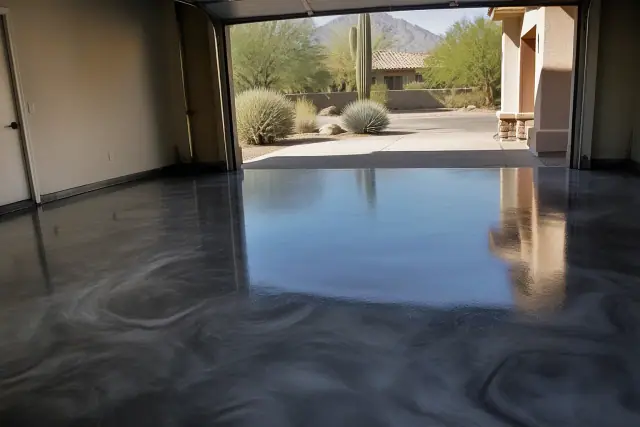
Metallic epoxy garage floor with a glossy finish in an Oro Valley, AZ home, showing desert views through the open door.

Mica pigments suspended in clear or tinted resin create a marbled, three-dimensional finish for showrooms, custom garages, and upscale patios. No two metallic pours look identical, and careful preparation and priming help prevent pigment from pooling in low areas.

Patio Floor Coatings

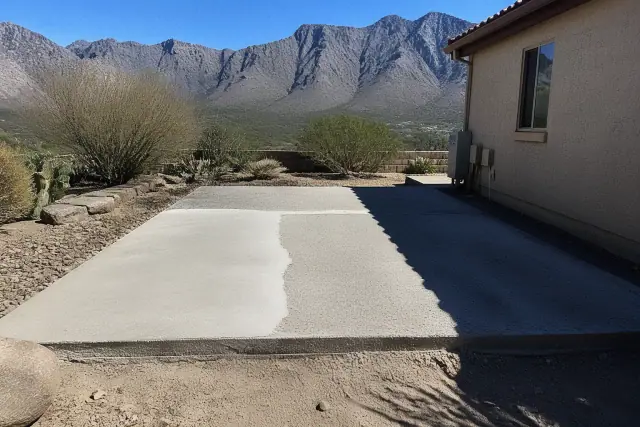
Concrete backyard patio undergoing structural repair and surface leveling in Oro Valley, AZ, with mountain views.

Patios need a finish suited to direct summer sun, monsoon rain, and temperature swings between hot afternoons and cool desert nights. UV-stable polyaspartic or polyurea topcoats provide a better outdoor choice than straight epoxy, with texture available near doors and step transitions.

Pool Deck Coatings

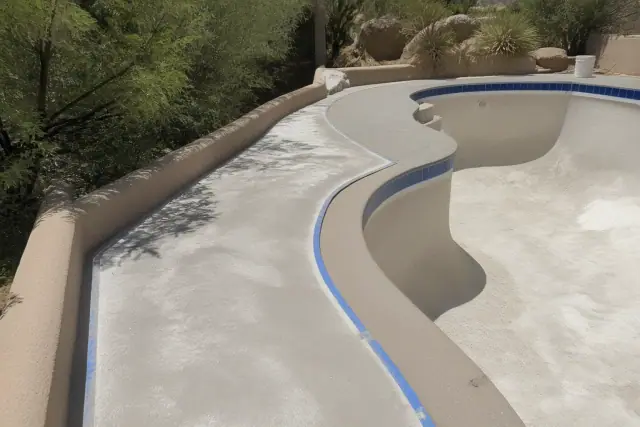
Concrete pool deck surface preparation with blue painter's tape at a residential project in Oro Valley, AZ.

Textured pool-deck systems balance wet-surface grip, barefoot comfort, and resistance to chlorine or salt exposure. Decorative flake and color blends can coordinate with the stucco and roof-tile tones common around Oro Valley properties.

Concrete Repair & Resurfacing

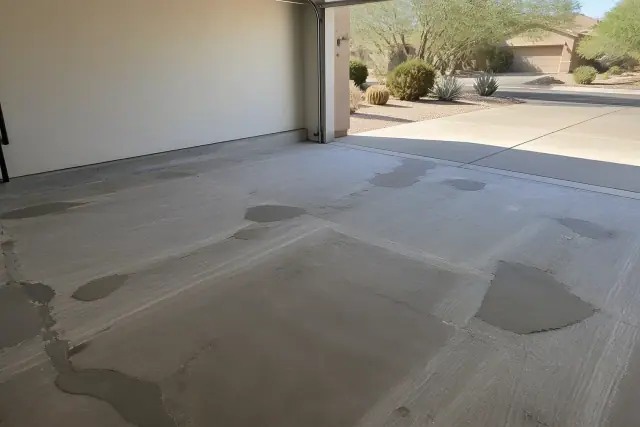
Prepped garage floor with concrete repairs and sanding for an epoxy project in Oro Valley, AZ.

Slabs in neighborhoods built before the 1990s expansion may show cracking, pitting, or spalling after years of sun exposure and soil movement. Crack chasing, epoxy injection where appropriate, and polymer-modified resurfacing create a sounder base before a coating is applied.

Choose the Right System

How to Choose a Floor Coating for Oro Valley

The right system depends on more than color. Slab condition, sun exposure, cure-time needs, traffic, chemical contact, finish preference, and moisture risk all influence whether epoxy, polyaspartic, a hybrid build, or repair-first approach makes sense.

Start with the Slab Condition

Cracks, pitting, spalling, oil, old paint, and prior coatings change the amount of preparation a floor needs. A real surface assessment identifies what must be removed or repaired before selecting the coating build.

Match the Floor to Daily Use

A single-bay garage, an oversized four-car custom garage, a showroom, and a forklift aisle place very different demands on a coating. Traffic weight, dropped tools, turning tires, and chemical exposure should guide resin type and build thickness.

Account for Sun and UV Exposure

Open garage doors, patios, and pool decks can receive sustained desert sun. UV-stable polyaspartic and polyurea topcoats resist yellowing better than standard epoxy on exposed surfaces.

Plan the Cure Window

Operating hours, parked vehicles, and household access determine how much cure time a project can accommodate. Faster-curing polyaspartic options may suit short access windows, while other systems allow more working time for decorative broadcasts.

Select Finish and Texture

Solid colors, full or partial flake broadcasts, metallic effects, and glossy or satin finishes create different looks. Texture and anti-slip aggregate also matter in areas where monsoon water or pool traffic can leave the surface wet.

Check Moisture Before Coating

Caliche-heavy soil and monsoon runoff can contribute to vapor moving through on-grade slabs. Calcium chloride or relative humidity testing helps determine whether the concrete is ready and whether the proposed coating system fits the moisture conditions.

Oro Valley Slab Issues

Common Concrete Coating Problems

Coating failures often begin below the finish, where moisture, contamination, weak concrete, or inadequate surface preparation limits adhesion. Oro Valley heat and seasonal water add stress, making diagnosis and preparation as important as the resin placed on top.

Request Slab Assessment

Moisture Vapor and Delamination

Monsoon season typically runs from June through September, when humidity and wet soil can increase moisture pressure beneath unsealed slabs. Skipping a moisture test can allow vapor to contribute to bubbles, lifting, or delamination.

Hot-Tire Pickup

Tires heated on asphalt can soften or pull at coatings that lack the right preparation, bond strength, or service-temperature rating. West- and south-facing garage doors can add direct-sun heat to that stress.

UV Yellowing and Chalking

Standard epoxy can yellow or chalk when it receives sustained ultraviolet exposure. Patios, pool decks, and garages with frequent open-door sun generally need a UV-stable topcoat rather than straight epoxy as the exposed finish.

Cracks, Pitting, and Spalling

Soil movement, age, and repeated desert heat can leave concrete cracked, pitted, or spalled. Coating over those defects without crack repair or resurfacing creates a weak foundation for the new finish.

Dust, Oil, and Old Coatings

Decomposed granite dust, oil stains, paint, and failing prior coatings interfere with adhesion when they remain on the surface. Mechanical removal and dust collection expose sounder concrete instead of trapping contamination beneath a new layer.

Wet-Surface Slip Risk

Monsoon water, pool splash, and tracked-in mud can make a smooth coating slippery. Flake, quartz, or another compatible texture additive can improve traction when selected for the way the space is used.

Why Choose Us

Why Oro Valley Chooses Professional Installation

Professional installation connects preparation, testing, repair, coating chemistry, and cure planning into one written scope. Tucson Epoxy Co. recommends the system after evaluating the slab and stands behind installation work when a coating issue stems from workmanship.

Mechanical Diamond Grinding

A walk-behind diamond grinder opens the concrete pore structure for a mechanical bond that acid etching alone does not provide. The slab is then vacuumed with dust collection so loose material does not remain under the primer.

Moisture and Adhesion Checks

Calcium chloride or relative humidity testing helps identify vapor risk before materials are ordered and applied. Older slabs off First Avenue and Oracle Road may also need deeper grinding to move past surface carbonation and reach sound concrete.

A System Matched to the Space

The coating build is selected around the actual use case rather than treated as a one-size-fits-all product. Residential vehicle traffic, commercial foot traffic, industrial chemicals, direct sun, and wet areas each call for different preparation, broadcast, and topcoat decisions.

Simple Process

Our Epoxy Flooring Process in Oro Valley

Each project moves from assessment and preparation through repair, coating, finishing, and care guidance. The sequence is adjusted for the slab, selected system, weather, and the time the property can remain out of service.

01.

Walk Through and Assess the Slab

We review the floor's intended use, sun exposure, existing finishes, stains, cracks, pitting, and access needs. That assessment defines the preparation plan and the coating options appropriate for the space.

02.

Diamond-Grind the Concrete

A walk-behind grinder mechanically profiles the slab, while a dust-collection vacuum removes the material released during preparation. Old paint, prior coatings, and oil-contaminated surface material are removed rather than covered.

03.

Repair and Test

Cracks are chased and repaired, and pitted or spalled areas are resurfaced as needed. Moisture testing then confirms whether the slab is ready for the planned primer and coating build.

04.

Apply Primer and Base Coat

The prepared slab receives the primer and base color specified for the system. Coverage, edges, and coating thickness are controlled so the decorative layer and topcoat have a consistent foundation.

05.

Broadcast the Selected Finish

Vinyl flake, quartz aggregate, or metallic pigment is added when the chosen design calls for it. The broadcast amount and texture are matched to the appearance, traction, and traffic requirements.

06.

Seal, Inspect, and Explain Care

A clear epoxy or polyaspartic topcoat seals the color and broadcast media. Before completion, we check sheen, mil thickness, and edge-to-edge coverage, then provide cure, cleaning, and parking instructions.

Finish Options

Coating Results for Oro Valley Properties

Case Study 1: Working Garage: A high-build base, optional flake broadcast, and hot-tire-resistant topcoat turn bare concrete into a surface designed for vehicles, tools, and routine cleaning.

Case Study 2: Commercial or Industrial Floor: Coating thickness, texture, and resin selection can be matched to foot traffic, forklifts, operating hours, wet conditions, and the chemicals used in the facility.

Case Study 3: Decorative Residential Finish: Glossy, satin, flake, and metallic options let homeowners coordinate a garage or patio with the rest of the property. In Oro Valley, where median household income runs close to 50% above the national figure, finish quality often matters alongside durability.

Start with Your Slab

Plan Your Oro Valley
Floor Coating
Project

Request a free epoxy flooring estimate to review the slab, preparation requirements, finish choices, and cure schedule before work begins. You will receive a project-specific scope instead of a flat recommendation based only on square footage.

Epoxy Flooring Help

FAQs About Garage Floor Epoxy in Oro Valley, AZ

These answers cover pricing, preparation, coating choices, cure time, maintenance, and service coverage using the conditions described for Oro Valley floors. Call if you want to discuss how those factors apply to your slab.

Call About Your Floor

Professional epoxy installation typically runs $3 to $12 per square foot, depending on the system, slab preparation, and design complexity. A written quote follows an assessment of the specific concrete rather than relying on a sight-unseen flat rate.

A typical two-car garage covers about 400 to 500 square feet and usually runs from $2,000 to $4,500 for a quality epoxy system. Premium builds with a polyaspartic topcoat, full flake broadcast, or metallic pigment may range from $4,500 to $7,000, depending on size, slab condition, and finish complexity.

A 20x20 garage contains 400 square feet, placing the draft's typical range at $1,200 to $4,800. Cracks, pitting, grinding needs, coating type, and decorative finish can move the final quote within that range.

A professionally installed epoxy or polyaspartic floor typically lasts 15 to 20 years with normal residential use, sometimes longer when maintained appropriately. Commercial and industrial floors under heavier traffic may need a refresh topcoat sooner, often within 7 to 10 years, while residential maintenance topcoats may be considered every several years.

Epoxy can be slippery when wet unless texture or anti-slip aggregate is included, and standard epoxy can yellow under sustained UV exposure. Some systems keep vehicles off the floor for several days, and coatings installed without grinding or moisture testing may peel or delaminate within the first year or two.

Polyaspartic and polyurea coatings offer better UV stability, faster curing, and more flexibility than standard epoxy, which can help under Oro Valley's intense sun. Some installations combine an epoxy base with a polyaspartic topcoat, while certain polyaspartic systems can be applied and cured in a single day when conditions allow.

A surface coating over an existing residential slab generally does not require a Town of Oro Valley building permit. Commercial work or projects involving significant concrete repair, resurfacing, or slab replacement may have different requirements, so the project scope should be checked against local rules.

Preparation begins with walk-behind diamond grinding, dust collection, crack chasing, and removal of oil, paint, or prior coatings. Pitted or spalled areas are repaired, then calcium chloride or relative humidity testing checks moisture before primer is applied.

Standard epoxy commonly needs 12 to 24 hours between coats and may require 5 to 7 days before full vehicle traffic. A polyaspartic topcoat can often accept light foot traffic within 24 hours and vehicle traffic within 72 hours, although weather and monsoon humidity can change the schedule.

UV-stable polyaspartic or polyurea topcoats are generally better suited to patios than straight epoxy because they resist yellowing under sustained sun. Texture can also be added for grip near sliding doors, steps, and areas exposed to monsoon rain.

Flake systems use vinyl chips to disguise tire marks and minor imperfections while adding texture. Metallic systems use mica pigment for a marbled, three-dimensional look, and no two pours appear identical; the better choice depends on the desired appearance and how the space is used.

Cracks, pitting, and spalling should be addressed before the finish is installed. Depending on the condition, preparation may include crack chasing, epoxy injection for structural cracks, or polymer-modified resurfacing so the coating has a stable base.

Yes, when the coating build is selected for the facility's traffic and exposures. Commercial scopes can address daily foot traffic and operating hours, while industrial systems may use higher mil thickness and quartz or aggregate for forklifts, loading, chemicals, or wet areas.

Service covers Rancho Vistoso, Naranja Park, Steam Pump Ranch, Catalina Shadows, Sun City Oro Valley, Oro Valley Country Club, Oro Valley Marketplace, and areas near Honey Bee Canyon Park and Pusch Ridge. The stated service area also includes Catalina, Marana, the Tucson foothills, and the greater Tucson metro across Pima County, including the Oracle Road and Tangerine Road corridors.

A sealed floor generally needs a damp mop or occasional compatible degreaser rather than aggressive scrubbing for set-in stains. Follow the project-specific cure and cleaning instructions, avoid the products identified by the installer, and take extra care with parking and hot tires during the first 30 days.