Proudly serving Tucson, Oro Valley, Marana, Vail, Sahuarita, Green Valley & surrounding areasCall or Text 24/7: +1 (520) 567-9887

Decorative Flake Epoxy Flooring and Concrete Finish Installation in Tucson, AZ

Tucson Epoxy Co. installs flake epoxy flooring for homes and businesses in Tucson, Arizona. Our concrete coating services include garage floor epoxy, polyaspartic floor coatings, commercial epoxy flooring, and industrial epoxy flooring. We also install metallic epoxy, patio and pool deck coatings, and concrete repair resurfacing across the Tucson metro area.

Exposed Tucson concrete can climb well past 140 degrees before monsoon rain suddenly hits the slab, while daily temperature swings of 30 to 40 degrees add more stress. Caliche-heavy Pima County soil can contribute to settlement cracking, pitting, and spalling beneath bare concrete or floor paint. We mechanically diamond grind or shot-blast the surface, repair damaged areas, and build a two-part epoxy system with a UV-stable polyaspartic or aliphatic polyurethane sealer.

Choose the flake blend, broadcast density, texture, and finish sheen that suit your garage, patio, pool deck, commercial entry, warehouse, or shop. Request an estimate based on the slab's condition, required repairs, coating type, square footage, and final finish.

Tucson Epoxy Co. installs flake epoxy flooring throughout Tucson, Oro Valley, Marana, Sahuarita, Vail, and greater Pima County.

★ ★ ★ ★ ★4.9/5 Average Rating · 20+ Years of Experience · Thousands of Customers Helped · Licensed & Insured · Residential & Commercial

Flake Epoxy Flooring Options & Benefits

What Is Flake Epoxy Flooring?

Flake epoxy floors are also called chip flooring, epoxy flake broadcast systems, vinyl-chip coatings, or quartz-flake floors, depending on the flake material. Each name describes colored polymer flakes broadcast into a wet pigmented epoxy base coat and sealed beneath a clear topcoat.

Vinyl composite flakes can be broadcast to full refusal for a solid decorative surface or applied as a partial broadcast for a lighter speckled look. After the base cures, the surface is scraped and sanded before two coats of polyaspartic or epoxy topcoat lock the flakes in place without loose chips or rough edges.

A two-part epoxy base provides adhesion and build, while a polyaspartic or aliphatic polyurethane sealer can improve UV stability for Arizona exposure. The finished texture helps conceal dust, tire scuffs, and everyday grit while adding practical traction underfoot.

Benefits of Flake Epoxy Flooring

A properly prepared flake system combines decorative flexibility with a protective surface suited to Tucson garages, patios, pool decks, and work areas. Its value comes from the complete layered installation rather than a single coat of floor paint.

  • Typically lasts 10 to 20 years with routine maintenance
  • Avoids the one- to two-year reapplication cycle common with bare concrete sealer
  • Resists motor oil, brake fluid, pool chemicals, and de-icing salts
  • Multi-colored flakes help hide dust, tire scuffs, and grit
  • Broadcast texture adds traction in wet garages and patios
  • UV-stable topcoats reduce yellowing and chalking in direct sun
  • Sealed surfaces limit water intrusion and concrete spalling
  • Blend, broadcast density, texture, and sheen can be customized
Concrete Coating Services

Epoxy Floor Coating Services

We match preparation, coating chemistry, flake density, texture, and topcoat to the slab's condition and the way the space is used. Explore residential, commercial, industrial, and exterior coating services designed around Tucson's heat, UV exposure, monsoon moisture, and concrete movement.

Flake Epoxy Flooring

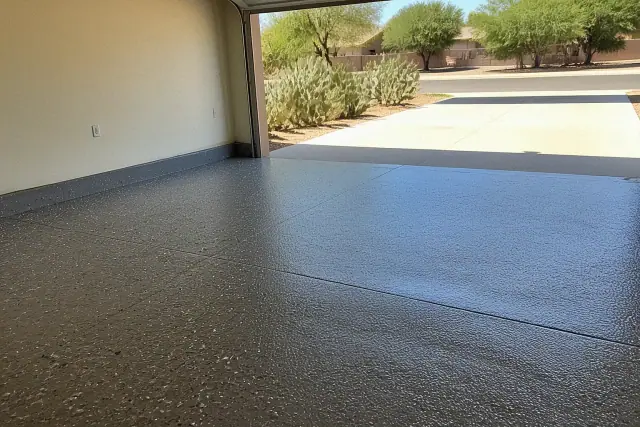
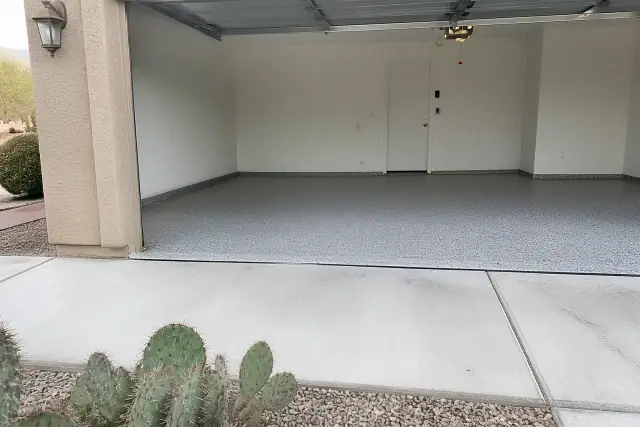
Two-car residential garage with flake epoxy flooring and desert views in Tucson, AZ.

A pigmented epoxy base receives a full or partial broadcast of decorative polymer flakes, followed by scraping, sanding, and clear sealing. This layered finish brings color variation, easier visual upkeep, and added texture to residential and business floors.

Request Estimate

Garage Floor Epoxy

Prepped residential garage floor with flake epoxy materials and an applicator in Tucson, AZ.

Garage floor systems are prepared for vehicle traffic, tire scuffs, motor oil, and brake fluid rather than treated like decorative paint. Color blend, broadcast density, and sheen can be selected to suit a standard garage, custom garage, or showroom-style space.

Request Estimate

Polyaspartic Floor Coatings

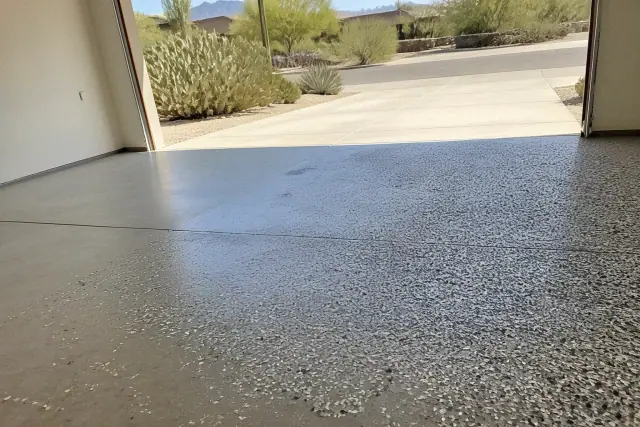
Concrete garage floor with fresh decorative flake coating and cacti visible outside in Tucson, AZ.

Polyaspartic coatings can serve as UV-stable clear topcoats over epoxy, helping exterior and sun-exposed floors resist ambering and chalking. High-build formulations also add scratch resistance for metallic, flake, and other performance coating applications.

Request Estimate

Commercial Epoxy Flooring

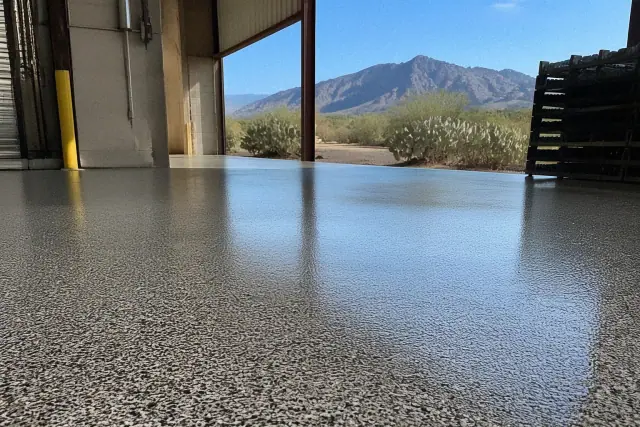
Finished flake epoxy flooring on an industrial concrete slab at a loading dock in Tucson, AZ, with desert mountain views.

Retail floors, restaurant kitchens, and office lobbies need coatings that tolerate daily foot traffic, rolling carts, frequent cleaning, and concentrated entry wear. Higher mil thickness can reinforce busy zones, while water-based epoxy options support low-VOC needs in occupied buildings.

Request Estimate

Industrial Epoxy Flooring

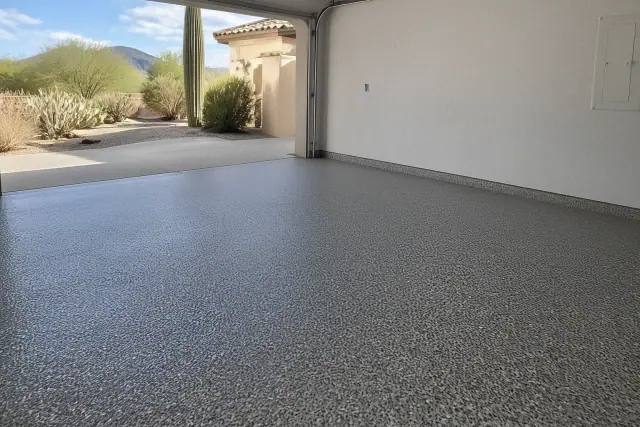
Finished flake epoxy garage flooring with a desert landscape view in Tucson, AZ.

Warehouses, manufacturing floors, and shops near Tucson's I-10 industrial corridors may need systems built for forklift traffic, chemical spills, and thermal shock at loading doors. Heavy-duty and solvent-based formulations can be matched to applicable ASTM abrasion and impact standards for the facility's use.

Request Estimate

Patio and Pool Deck Coatings

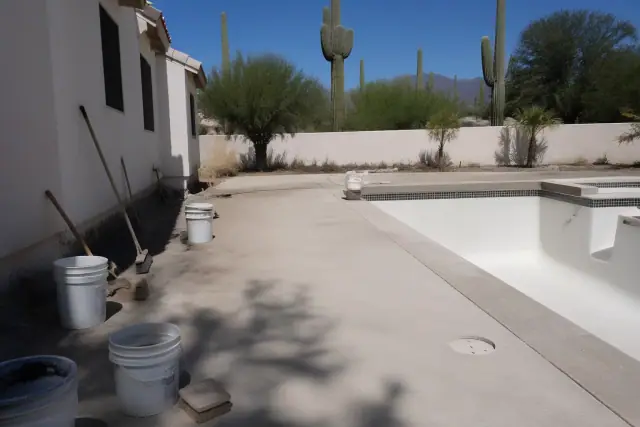
Drained swimming pool deck with concrete surfaces and supplies ready for sealant in Tucson, AZ.

Exterior patio coatings use UV-resistant topcoats to limit fading, chalking, monsoon staining, and sun-driven surface deterioration. Pool deck systems add moisture resistance and built-in traction for chlorine splash and sudden wet conditions without trapping water beneath the coating.

Request Estimate
Color, Texture & Performance

Flake Epoxy Design & Performance Options

The right floor depends on appearance, traffic, sunlight, wet conditions, indoor-air needs, and chemical exposure. Compare full and partial flake broadcasts, Sonoran-inspired blends, metallic finishes, and specialty performance coatings before choosing the final system.

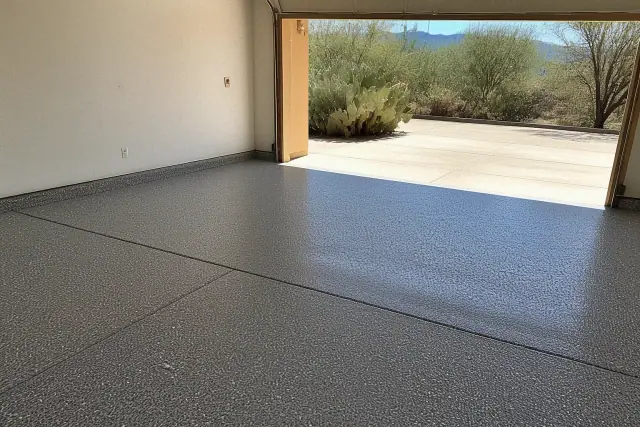
Full-broadcast flake epoxy garage floor in a Tucson, AZ residence with desert landscaping visible through the open door.

Full-Broadcast Flake Flooring

Flakes are broadcast to full refusal into the wet base for a dense, continuous decorative surface. The cured floor is scraped and sanded before clear topcoats seal the profile and remove loose chips or sharp edges.

  • Dense, solid decorative appearance
  • Greater texture depth and grip
  • Hides wear patterns longer than a light speckle
  • Scraped and sanded before sealing
  • Texture depth can be matched to the desired look and budget
Request Estimate
Partial-broadcast flake epoxy garage flooring in a Tucson, AZ residence with desert landscape in the background.

Partial-Broadcast Flake Finish

A partial broadcast leaves more of the pigmented base visible for a lighter speckled finish. It uses less flake than a full-refusal system while still adding color variation and useful surface texture.

  • Lighter, more open speckle pattern
  • Pigmented base remains part of the design
  • Lower flake density than full refusal
  • Adds traction without maximum texture depth
  • Suited to customers who prefer a subtler finish
Request Estimate
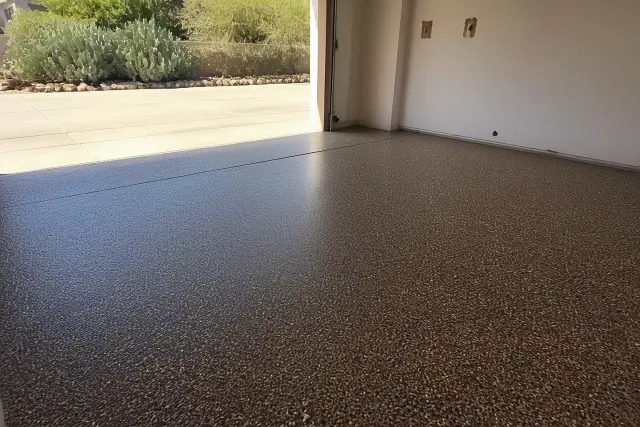
Concrete residential garage floor with Canyon and Coyote flake epoxy finish in Tucson, AZ.

Canyon and Coyote Flake Blends

Canyon Flake brings warm tan, rust, and charcoal tones that pair with terracotta and stucco exteriors. Coyote Flake combines cooler gray and taupe for modern desert-contemporary garages and patios.

  • Canyon: tan, rust, and charcoal
  • Coyote: gray and taupe
  • Matte finish for lower shine
  • Semi-gloss for balanced reflection
  • Glossy finish for maximum shine
Request Estimate
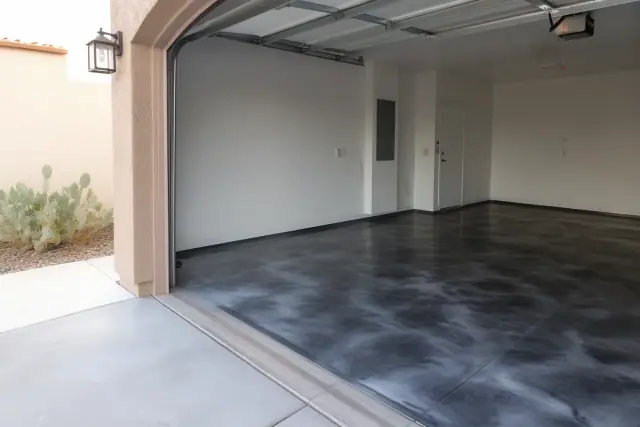
Completed metallic epoxy flake flooring in a residential garage in Tucson, AZ with desert landscaping visible outside.

Metallic Epoxy Flooring

Mica pigments move and pool while the wet coat is manipulated, creating a three-dimensional, water-like finish. The look is popular in showrooms, custom garages, and upscale patios around the Catalina Foothills, often beneath a high-build polyaspartic topcoat for scratch resistance.

  • Flowing mica-pigment movement
  • Three-dimensional visual depth
  • Water-like custom appearance
  • Designed for showrooms, garages, and patios
  • Compatible with a scratch-resistant polyaspartic topcoat
Request Estimate
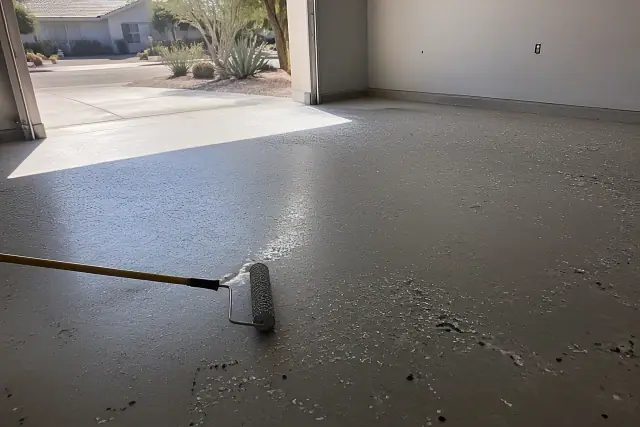
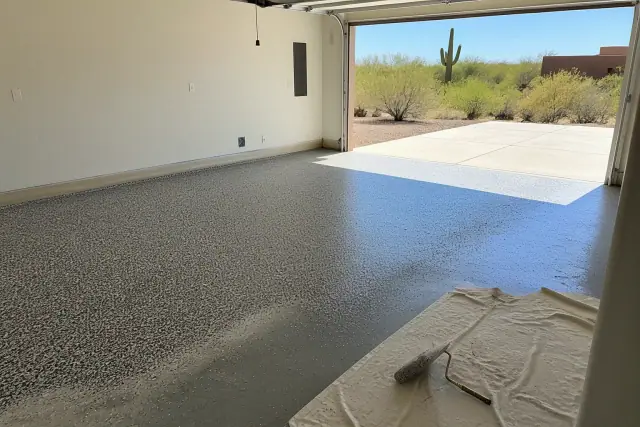
Concrete floor in a Tucson, AZ garage prepped with decorative flakes and a paint roller under bright sunlight.

Specialty Performance Coatings

Specialty systems address heavier texture, indoor-air considerations, wet entries, chemical exposure, or hygiene-sensitive spaces. The coating and aggregate are selected for the property's actual use rather than applied as a one-formula solution.

  • Quartz-infused texture for busy commercial entries
  • Aluminum oxide grit for wet-area traction
  • Water-based epoxy where low VOC output matters
  • Solvent-based epoxy for maximum chemical resistance
  • Antimicrobial additives that inhibit surface bacterial growth
Request Estimate
Finding Your Right Fit

Choosing the Right Flake Epoxy Approach

Concrete condition, cracks and spalls, traffic, chemical exposure, sunlight, wet-use needs, flake density, square footage, and sheen all affect the right coating plan. Older Tucson slabs with settlement from expansive soil may need heavier grinding or resurfacing before coating so underlying defects do not telegraph through the finish.

Mechanical Surface Preparation

Diamond grinding or shot-blasting opens the concrete pore structure to a proper CSP profile before coating. This mechanical approach provides a stronger adhesion foundation than relying on acid etching alone.

Tucson Climate-Aware Coatings

A UV-stable polyaspartic or aliphatic polyurethane sealer is selected where Arizona sun would cause standard epoxy resin to amber or chalk. Exterior texture can also be adjusted for the sudden wet conditions created by monsoon rain and pool splash.

Customized Flake and Finish

Flake blend, full or partial broadcast, texture depth, and matte, semi-gloss, or glossy sheen are chosen for the space. The result can complement terracotta, stucco, modern desert-contemporary design, or a commercial performance requirement without treating every slab the same.

What Sets Us Apart

Why Choose Tucson Epoxy Co. for Flake Flooring Installation?

Our approach starts below the decorative layer: the concrete is mechanically profiled, cracks and damaged areas are repaired, and the coating is matched to traffic, sunlight, moisture, chemicals, and design goals. Consistent manufacturer-specified mil thickness, an even hand-broadcast flake pattern, and a maintained wet edge help prevent thin spots and lap lines before the clear topcoat is applied.

Request an Estimate

Extreme Heat and UV Exposure

Direct Arizona sun heats exposed slabs beyond 140 degrees and can make standard epoxy resin amber and chalk within a couple of years. A UV-stable clear coat helps protect the decorative layer on garages, patios, and pool decks that receive sunlight.

Monsoon Water and Slick Surfaces

Heavy monsoon rain can track water across a hot garage or patio slab, while pool splash creates repeated wet conditions. Broadcast texture or aluminum oxide grit can add slip resistance without requiring customers to give up a matte, semi-gloss, or glossy finish.

Cracks, Pitting, and Spalling

Hairline cracks, pitting, control joints, and spalled concrete need attention before the color coat goes down. Polymer-modified repair mortar, semi-rigid epoxy, or polyurea crack filler is selected according to the damaged area and expected slab movement.

Oil and Chemical Spills

Garages, shops, kitchens, and industrial floors may encounter motor oil, brake fluid, pool chemicals, cleaning products, or facility-specific spills. Coating chemistry and topcoat resistance should be chosen for the actual exposure instead of relying on raw concrete or a single paint coat.

Forklift and Cart Traffic

Rolling carts wear commercial entry paths, while forklifts and loading activity bring heavier abrasion, impact, and thermal shock to industrial floors. Higher mil thickness and performance formulations can reinforce these zones when matched to the facility's traffic.

Peeling and Ambering Coatings

Floor paint can peel when it never bonded to an opened concrete pore structure, and interior-rated resin can discolor outdoors. Mechanical profiling, consistent coating thickness, maintained wet edges, and a UV-resistant exterior topcoat address the common causes behind early coating failure.

How It Works

Our Flake Epoxy Flooring Process

After the coating plan is selected, installation follows five core stages: mechanical surface preparation, crack and joint repair, base coat application, flake broadcast, and topcoat sealing. Most residential garages are completed in one to two days, although slab condition, repairs, temperature, and humidity affect the schedule.

01.

Review the Slab and Select the System

We review concrete condition, cracks, spalls, square footage, traffic, sunlight, wet-use needs, and chemical exposure. Those factors guide the repair scope, coating type, flake density, texture, color blend, and sheen used in the estimate.

02.

Mechanically Prepare the Concrete

Diamond grinding or shot-blasting opens the slab to the required surface profile. This step removes the weak surface layer and creates the pore structure needed for long-term coating adhesion.

03.

Repair Cracks, Joints, and Spalls

We fill hairline cracks, pitting, and control joints with polymer-modified mortar, semi-rigid epoxy, or polyurea filler selected for slab movement. Heavier settlement damage may require extra grinding or concrete resurfacing before coating.

04.

Apply the Pigmented Base Coat

The pigmented two-part epoxy base is rolled at the manufacturer-specified mil thickness. Crews work in sections and maintain a wet edge to limit lap lines before the flake broadcast begins.

05.

Broadcast the Decorative Flake

Vinyl composite flakes are broadcast by hand at the selected partial or full-refusal density. Even distribution gives the floor a consistent color pattern and prevents bare areas or heavy clusters.

06.

Scrape, Seal, and Cure the Floor

Flakes are typically ready to scrape four to six hours after broadcast, then the surface is sanded and sealed. Allow roughly 24 hours before light foot traffic, 72 hours or more before vehicles or heavy equipment return, and 5 to 7 days for full chemical cure, depending on temperature and humidity.

Plan Your Floor

Schedule a Flake Epoxy
Flooring
Estimate

Tell us how you use the space, what condition the concrete is in, and the color, texture, and sheen you prefer. We can build an estimate around the required preparation, repairs, flake density, coating type, and square footage.

Helpful Answers

Flake Epoxy Flooring FAQs

Review practical answers about Tucson flake epoxy flooring costs, preparation, installation, curing, finish options, maintenance, and service coverage. Your final recommendation and estimate will depend on the slab and how the space is used.

Call Our Experts

Across the industry, installed flake epoxy flooring generally runs $5 to $10 per square foot, while custom blends or heavier flake density can approach $13 per square foot. That range includes surface preparation, base coat, broadcast flake, and topcoat, but slab condition and crack repair can change the final estimate.

A slab needing diamond grinding alone may fall near $5 to $6 per square foot. Heavier grinding or crack chasing can push preparation and coating work to $8 per square foot or more before factors such as flake density, coating type, and sheen are considered.

A 20x20 garage contains 400 square feet. A full flake system with proper preparation typically runs $4,000 to $7,000, while a more basic single-color coating without flake is roughly $2,000 to $3,000 when the slab is in reasonable condition and has no major structural cracking.

Most residential garage projects are completed in one to two days. A one-day installation may be possible for a smaller space, but concrete condition, repairs, product cure windows, temperature, and humidity determine the actual schedule.

Topcoats need roughly 24 hours before light foot traffic and 72 hours or more before vehicles or heavy equipment return. Full chemical cure generally takes 5 to 7 days, depending on temperature and humidity.

A properly installed flake epoxy system typically lasts 10 to 20 years with routine maintenance. By comparison, bare concrete sealer may need reapplication every one to two years in Tucson's UV-intense environment.

Common names include flake epoxy floors, chip flooring, epoxy flake broadcast systems, vinyl-chip coatings, and quartz-flake flooring. Each refers to decorative polymer flakes broadcast into a wet epoxy base and sealed under a clear topcoat.

Canyon Flake is a warm tan, rust, and charcoal blend that pairs naturally with terracotta and stucco. Coyote Flake uses cooler gray and taupe for modern desert-contemporary spaces, and either blend can be finished in matte, semi-gloss, or gloss.

A full-refusal broadcast creates a dense decorative surface with more texture and longer-wearing visual coverage. A partial broadcast leaves more pigmented base visible for a lighter speckle, and both are scraped, sanded, and protected by the selected clear topcoat system.

Standard epoxy resin can amber and chalk under direct Arizona sun. A polyaspartic or aliphatic polyurethane sealer engineered for UV stability helps protect exterior and sun-exposed flake or metallic floors.

Yes. Broadcast-flake texture adds traction, and aluminum oxide grit can be added to topcoats for pool decks, patios, and commercial entries where rain or splash creates wet conditions. Texture depth should be balanced with the desired cleaning feel and finish sheen.

It can be when the system is specified for the facility. Commercial floors may need higher mil thickness in high-traffic zones or water-based, low-VOC coatings in occupied buildings, while industrial floors may require heavy-duty or solvent-based formulations for forklifts, chemical exposure, abrasion, impact, and thermal shock.

Tucson Epoxy Co. installs flake epoxy flooring and concrete coatings throughout Tucson, Oro Valley, Marana, Sahuarita, and Vail. Service also extends across greater Pima County.