Typical Installed Range
Installed garage coatings span about $3-$12 per square foot across the Tucson metro area, while many professional projects land between $4 and $9 per square foot.
Tucson Epoxy Co. puts the typical cost to coat a 2-car garage in Tucson between $1,600 and $5,500, with many properly prepared flake or polyaspartic projects falling between $2,000 and $4,000. The local team installs garage floors across Pima County every week, from Oro Valley tract homes to older Catalina Foothills slabs, so the price needs to account for more than square footage. The final total depends on the concrete condition, surface preparation, and coating system.
Installed garage coatings span about $3-$12 per square foot across the Tucson metro area, while many professional projects land between $4 and $9 per square foot.
Mechanical diamond grinding runs roughly $1-$2 per square foot. Cracks, spalling, and prior oil staining may also require compatible repair materials before the coating can bond.
Solid-color epoxy is the budget entry point, while premium metallic systems commonly use 100% solids resin. Flake density, metallic pigments, clear-coat thickness, and UV-stable polyaspartic or polyurethane topcoats raise the price in exchange for different texture, appearance, cure time, and durability.
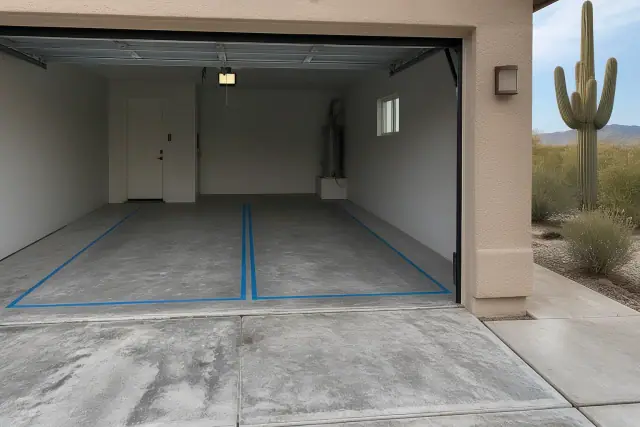
A wide view of a typical two-car garage connects the quoted floor area to the space being coated. Door edges and sun exposure also show where slab temperatures may be highest.
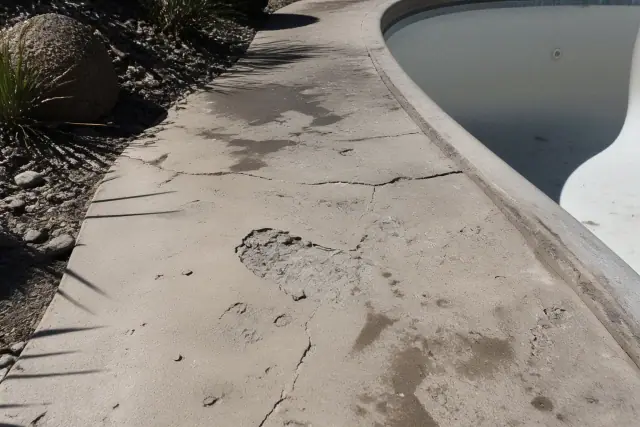
A close view of slab damage helps explain why preparation is priced separately. These conditions can require epoxy mortar or polyurea filler before grinding and coating.
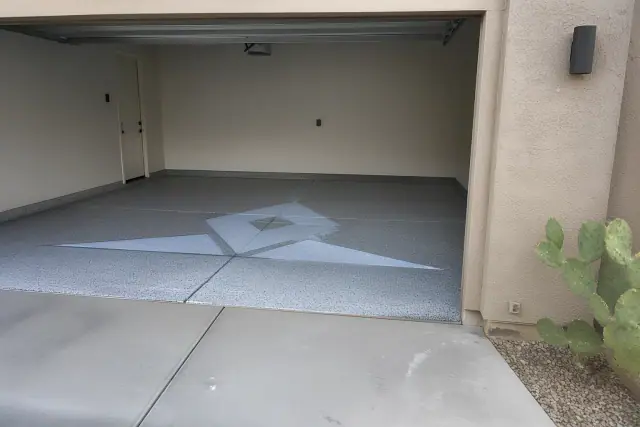
Side-by-side finish samples make differences in texture, sheen, and flake coverage easier to compare. The selected system is one of the largest variables in the total estimate.
For a properly prepared flake or polyaspartic floor in a Tucson 2-car garage, $2,000-$4,000 is a practical comparison range. System upgrades and slab damage can move the total outside it.
Labor often represents about 60% of a quote because it covers grinding, repairs, moisture testing, application, and cure windows. Materials account for about 40%, although metallic pigments and premium topcoats shift that balance.
Heavily damaged concrete can add $3.25 or more per square foot before coating. Ask for grinding, crack filling, spall repair, oil-stain treatment, and moisture work to be itemized.
A quote below $1,500 may reflect minimal preparation and a single coat. A total above $6,000 often points to a metallic finish, extensive concrete repair, or both, so compare scope rather than price alone.
| Coating Option | Typical 400-Square-Foot Price | Cost Context |
|---|---|---|
| Standard solid epoxy | $1,200-$2,400 | Lowest-cost coating option for basic parking and storage use. |
| Flake epoxy | $2,000-$3,500 | Added texture and coverage for tire marks; flake broadcast adds $0.50-$1.50 per square foot. |
| Metallic epoxy | $4,000-$7,000 | Premium marbled finish with more material and application skill. |
| Polyaspartic coating | $2,000-$3,000 | Fast cure and better resistance to UV yellowing. |
| Clear topcoat add-on | $1-$2 per square foot | Extra wear and UV protection over the base coating. |
A 400-450-square-foot garage typically needs 2-3 gallons of base-coat epoxy and 1-2 gallons of topcoat at a manufacturer coverage rate of about 200-250 square feet per gallon per coat. Full professional installation commonly runs $2,000-$5,500 and includes diamond grinding, moisture testing, crack repair, and a two-to-three-coat system. The scope should also address ground-concrete dust in line with Pima County Department of Environmental Quality dust-control requirements. With light maintenance, properly installed epoxy may last 10-20 years, while polyaspartic and polyurea systems may reach 15-20+ years.
A Tucson garage slab can exceed 140°F in direct sun, yet epoxy commonly needs a slab temperature between 55°F and 90°F for a proper cure. From May through September, work may need to be timed around cooler application windows; monsoon humidity and moisture vapor also affect preparation. Without a UV-stable topcoat, standard epoxy can amber and chalk within a year or two. Mechanical grinding to concrete surface profile CSP 3 or higher, moisture testing, and bond checks such as ASTM D4541 address adhesion more reliably than acid etching alone.
A 20-by-20-foot garage is 400 square feet, so it follows the same $1,600-$5,500 system-and-prep range used throughout this guide. The main downsides are slipperiness when wet without aggregate, hot-tire pickup, and UV yellowing without the right topcoat. Coating sound existing concrete is generally less expensive than demolition and a new slab, and professional installation often takes two to four days rather than the weeks associated with a new pour. Polyaspartic can cure in hours instead of days, but the slab still needs correct preparation and temperature control.
Share the garage dimensions, preferred finish, and any visible cracks, spalling, stains, or moisture concerns. Ask whether the estimate includes grinding, repairs, moisture testing, the coat count, and a UV-stable topcoat so you can compare complete scopes.