Match Resin to Traffic
Light residential foot traffic can use a thinner water-based build, while daily vehicle, forklift, or chemical exposure calls for a more robust 100% solids base and protective topcoat.
At Tucson Epoxy Co., choosing the right epoxy starts with matching resin chemistry, film thickness, and topcoat to the slab, expected traffic, moisture, and UV exposure. That choice matters across Tucson-from garages in the Catalina Foothills and warehouses near the airport industrial corridor to pool decks in Oro Valley and Vail-because each floor faces different conditions.
Light residential foot traffic can use a thinner water-based build, while daily vehicle, forklift, or chemical exposure calls for a more robust 100% solids base and protective topcoat.
Diamond grinding or shot blasting creates a mechanical profile for adhesion. Calcium chloride testing or relative humidity probes can reveal moisture that may require a barrier system.
Standard epoxy needs slab and ambient temperatures of roughly 50-90°F to cure correctly, while polyaspartic systems tolerate temperatures down into the 30s. Early-morning summer installation helps avoid hot slabs that shorten working time.
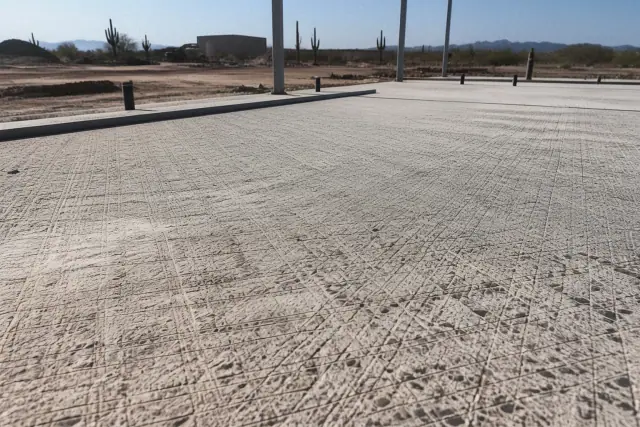
A mechanically abraded surface gives the coating a consistent profile to grip. Skipping that step and relying on acid etching alone can leave a coating vulnerable to bubbling or peeling within the first year.
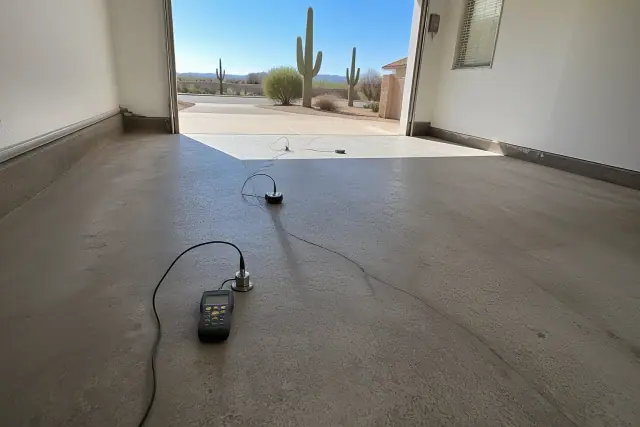
Caliche soil and monsoon runoff can push vapor through uncoated slabs, especially in Tucson homes built before the 1990s. Testing shows whether a moisture-barrier epoxy is appropriate.
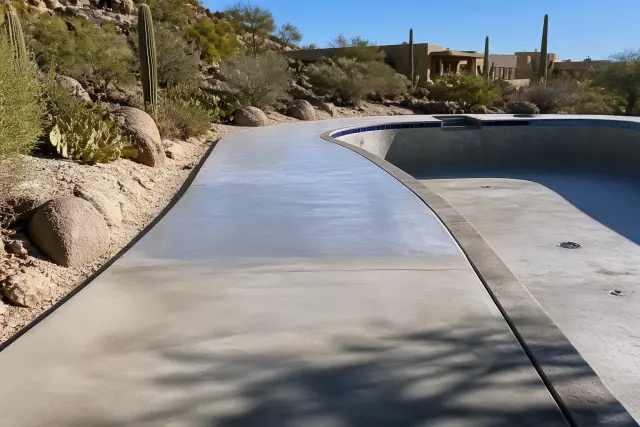
Tucson slab surface temperatures can exceed 140°F in direct summer sun. A UV-stable polyaspartic topcoat helps patios and pool decks resist that exposure.
Water-based epoxy is easier to apply in guest rooms, offices, and other tight interiors. Its lower-VOC, thinner build trades away some chemical resistance.
A 100% solids epoxy base delivers full film thickness without water or solvents flashing off. Pair it with a urethane or polyaspartic topcoat for abrasion and stain resistance.
For Tucson garages, a 100% solids base with a flake broadcast and polyaspartic topcoat handles hot-tire pickup without softening or lifting.
Broadcast aluminum oxide or another aggregate into the topcoat on stairs, ramps, and high-traffic zones to maintain slip resistance when the floor is wet.
| System | Best Fit | Key Tradeoff |
|---|---|---|
| Water-based epoxy | Light residential foot traffic and tight interior spaces | Lower VOC content and a 3-5 mil build, but less chemical resistance |
| 100% solids epoxy | Garages, commercial kitchens, and vehicle or industrial traffic | A 20-30 mil build per coat with strong chemical and impact resistance |
| Solvent-based epoxy | Porous concrete that benefits from deeper penetration | Stronger penetration, with VOC content regulated under Arizona Department of Environmental Quality air-quality rules |
| Polyaspartic topcoat | Patios, pool decks, and other UV-exposed floors | UV stability and a wider application-temperature range |
Coverage runs roughly 150-200 square feet per gallon per coat. A 1,000 sq ft garage typically needs 5-7 gallons across the base and top coats, so measure the floor and account for the complete coating build rather than pricing one coat alone.
Start with four conditions: substrate condition and porosity, moisture content, expected traffic, and sun or chemical exposure. Two-part resin and hardener commonly use a fixed 2:1 or 1:1 mix ratio by volume, and pot life can run only 20-40 minutes in Tucson's heat. Off-ratio mixing can leave the floor brittle or permanently tacky.
How much does an epoxy floor cost? Material and labor together run $4-$9 per square foot depending on flake, metallic, or polyaspartic upgrades. When can vehicles return? Vehicle traffic cure typically takes 24-72 hours, with full chemical cure reached within about a week. Which finish hides Tucson dust? Satin or matte shows less fine dust and scratching than gloss.
Share how the floor is used, whether it is indoors or exposed to sun, and any moisture or existing-coating problems. The team can compare preparation, base-coat, and topcoat options before providing an estimate.