Proudly serving Tucson, Oro Valley, Marana, Vail, Sahuarita, Green Valley & surrounding areasCall or Text 24/7: +1 (520) 567-9887
Guides

Is Epoxy Flooring Truly Good for Commercial Use ?

Tucson Epoxy Co. installs commercial-grade epoxy and polyaspartic flooring across Pima County for warehouses, restaurants, retail stores, and medical facilities. When matched to traffic, chemical exposure, slab moisture, and downtime needs, these systems can withstand forklift loads, constant foot traffic, and Tucson's heat while providing a seamless, easy-to-clean surface.

Quick Summary

  • Yes. Commercial-grade epoxy and polyaspartic coatings can handle forklift traffic, chemical spills, and Tucson's 100-plus degree summers when installed at 20-30 mils or thicker.
  • Installed commercial epoxy typically costs $3 to $15 per square foot, depending on system type and the slab repairs or preparation required.
  • A properly installed commercial system can last 10 to 20 years or more with routine cleaning and periodic topcoat recoating.
  • The main risks are moisture vapor, hot tire pickup from undercured epoxy, and wet-slip hazards when the topcoat lacks slip-resistant aggregate.

Commercial Epoxy at a Glance

A Layered, Seamless Surface

Commercial epoxy bonds to a properly prepared slab and creates a monolithic floor without grout lines or seams that collect dirt and bacteria. High-build layers can resist abrasion, rolling loads, oils, and cleaning chemicals.

Match the System to the Facility

Warehouses, commercial kitchens, showrooms, hospitals, schools, gyms, and automotive shops expose floors to different loads and spills. Traffic, chemical resistance, slip resistance, appearance, and available downtime should determine the coating build.

Test and Prepare the Slab

Moisture testing, crack and spall repair, and mechanical surface profiling come before coating. Adhesion failures usually trace to skipped or rushed preparation rather than the coating material itself.

Commercial Floor Comparisons

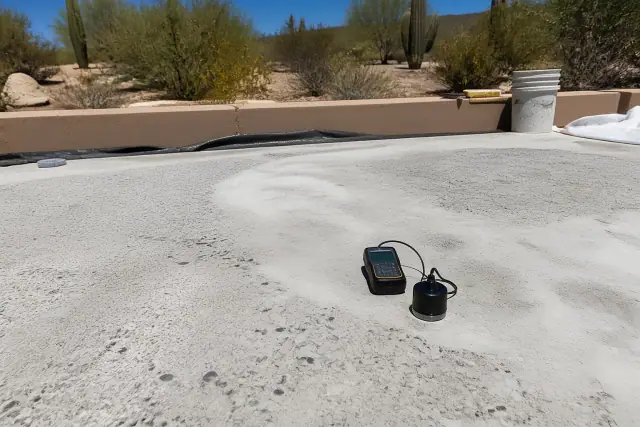
Moisture Testing and Surface Profiling

Moisture testing and surface profiling tool on a concrete slab in a Tucson, AZ backyard.

A commercial slab being moisture-tested beside a mechanically profiled area. The comparison should make clear that preparation creates the bond a coating needs.

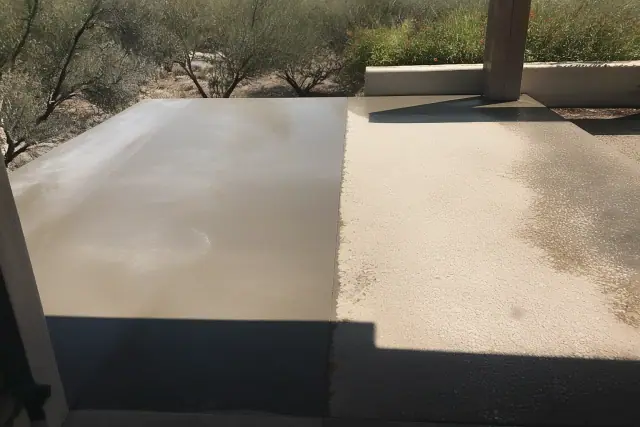
Thin Coating Versus Aggregate-Broadcast System

Concrete patio repair with aggregate surface preparation in a Tucson, AZ backyard with desert landscaping.

Compare a thin single-coat finish with a multi-layer system containing broadcast aggregate and a protective topcoat. The build should visibly reflect the different abrasion, impact, and slip-resistance demands.

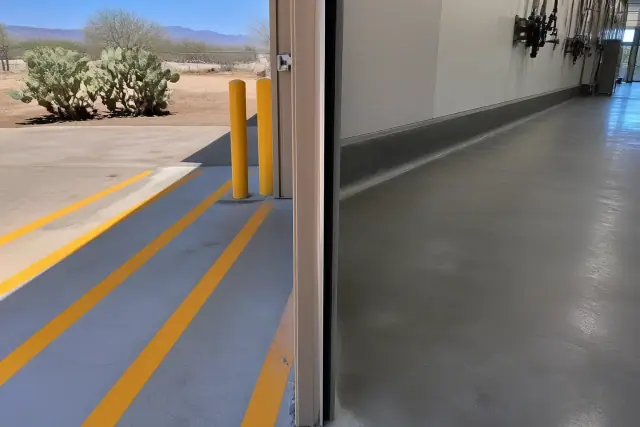
Forklift Aisle Versus Commercial Kitchen

Industrial concrete floor with safety markings for a forklift aisle and kitchen cove base in Tucson, AZ.

Rolling-load wear in a warehouse aisle beside grease, water, and steam-cleaning conditions in a kitchen. Each space needs a formulation and texture selected for its actual use.

Commercial Floor Snapshot

Preparation Standard

Test slab moisture using ASTM F710 guidance and verify the concrete surface profile against International Concrete Repair Institute CSP standards before coating.

Commercial System Build

Commercial and industrial floors often use 100% solids epoxy or polyaspartic resin at 20-40 mils, with broadcast aggregate added where slip resistance and impact absorption matter.

Return-to-Service Window

Traditional epoxy can require 24 to 72 hours before foot traffic and up to a week for full chemical cure. Fast-curing polyaspartic systems cure in hours rather than days.

Maintenance Needs

Routine mopping handles normal upkeep, while the protective topcoat may need recoating every several years. This avoids the recurring wax stripping and grout sealing associated with some other commercial floors.

Commercial System Cost Comparison

System TypeInstalled Cost Per Sq FtTypical Commercial Use
Basic solid color epoxy$3 - $6Storage and light office use
Flake epoxy$5 - $9Retail, restrooms, and showrooms
Polyaspartic$6 - $10Fast-turnaround retail and restaurants
Metallic epoxy$8 - $14Showrooms, lobbies, and high-end retail
Heavy-duty industrial epoxy$8 - $15Warehouses and manufacturing floors

Why Commercial Epoxy Works

A correctly specified coating seals the prepared concrete and provides a continuous surface that resists dusting, pitting, staining, abrasion, and many job-specific chemicals. Broadcast flake with a urethane topcoat suits rolling loads and scuffing, metallic epoxy serves appearance-focused showrooms and lobbies, and slip-resistant, NSF-compatible systems address grease and steam cleaning in food-service areas. The value comes from selecting the build for the facility rather than applying one generic package everywhere.

What Changes the Recommendation

Slab moisture, cracks or spalling, rolling loads, chemical exposure, wet conditions, appearance goals, and the allowable shutdown window all change the right specification. A 5,000 square foot warehouse floor may be turned around in a matter of days with a fast-curing polyaspartic system, while traditional epoxy needs a longer cure window. Older slabs that require grinding, crack repair, resurfacing, or moisture mitigation also raise the final cost and preparation time.

Common Follow-Up Questions

How much should you budget? A 20x20 garage is 400 square feet and typically costs $1,600 to $4,800, while a 1,000 square foot commercial space generally costs $4,000 to $12,000 depending on the system and slab preparation. Is a permit required? A straightforward coating over an existing slab often does not need a separate permit, but structural concrete repair or occupancy changes may require review by the City of Tucson Development Services Department or Pima County, and commercial flooring work can fall under Arizona Registrar of Contractors licensing requirements.
Plan the Right System

Plan a Commercial Floor Estimate

Share the floor's square footage, facility use, traffic, chemical exposure, shutdown window, and visible slab damage. An on-site inspection can identify moisture testing, surface preparation, repairs, and the coating build before pricing is finalized.