What These Problems Mean
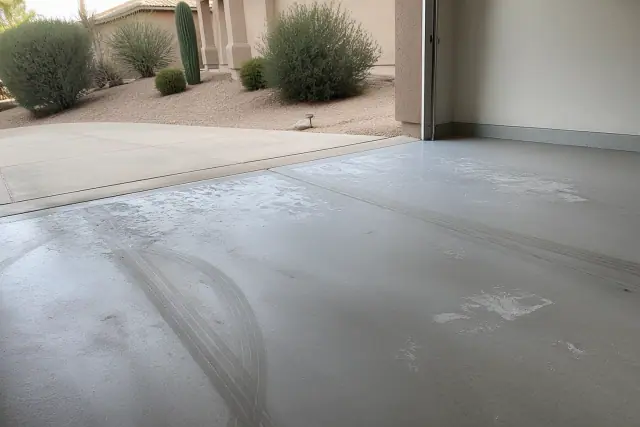
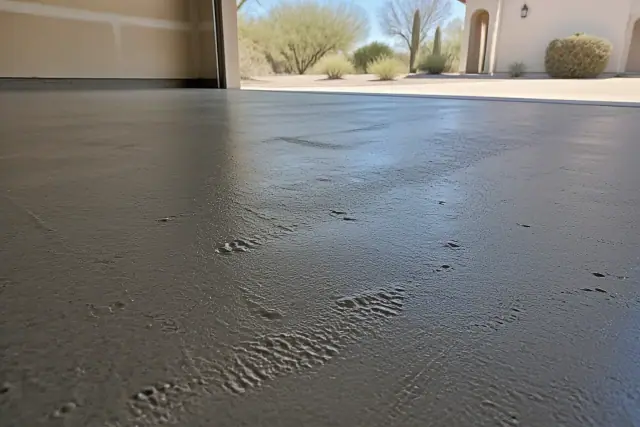
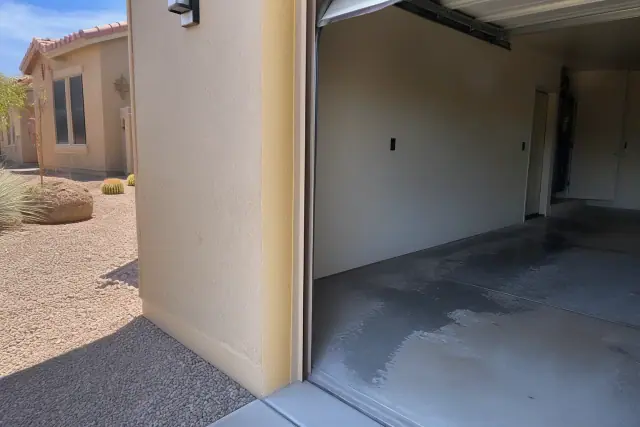
The pattern of damage is more useful than the label "epoxy failure." Peeling in sheets points below the coating to prep or moisture; chips point to film thickness or impact; yellow bands point to daily sunlight; and a slick surface points to the missing traction additive. Salt damage is less common in Tucson than in colder states, but de-icing salt or pool-equipment runoff can still contribute to chemical damage when it remains on the floor.
Factors That Change the Fix
New concrete should receive the full 28-30 day cure described in the draft before coating, and application below 55°F slab temperature or above 85% humidity can weaken the chemical cure. Moisture can be checked with calcium chloride testing under ASTM F1869 or relative-humidity probes under ASTM F2170; active cracks may need routing and a semi-rigid polyurea or epoxy crack filler. The three recurring mistakes are skipping moisture tests, coating over old sealer, and rushing recoat windows, so repair versus full removal should follow an inspection rather than a patch over failed material.
Common Follow-Up Questions
How long should a floor last? Professional 100% solids epoxy or polyaspartic systems can serve for 10-20 years under normal residential use, while DIY kits often show problems within 1-3 years; heavier commercial or industrial traffic may call for a refresh topcoat every 5-10 years. Is polyaspartic better? It resists heat and UV exposure better and may be ready for traffic in 24 hours instead of the 3-5 days described for epoxy, though it costs more. Can peeling simply be patched? No-the loose coating must be diamond ground away and the concrete profile restored before recoating.