Higher Installed Cost
Metallic pigment powders cost more than standard tints, and creating the marbled, three-dimensional effect requires careful hand work before the coating sets.
Tucson Epoxy Co. helps Pima County homeowners and business owners weigh metallic epoxy's dramatic finish against its higher cost, visible scratches, wet-surface slip risk, and sensitivity to UV exposure. In Tucson, careful slab preparation, moisture testing, and the right protective topcoat matter because defects can show through the clear finish and unprotected epoxy can yellow in intense sun.
Metallic pigment powders cost more than standard tints, and creating the marbled, three-dimensional effect requires careful hand work before the coating sets.
The transparent wear layer has no color or texture to hide scuffs, gouges, or dropped-tool marks, so everyday damage stands out.
Short pot life and limited working time leave little room for error while the installer spreads pigment, releases bubbles, and shapes the pooling effect.
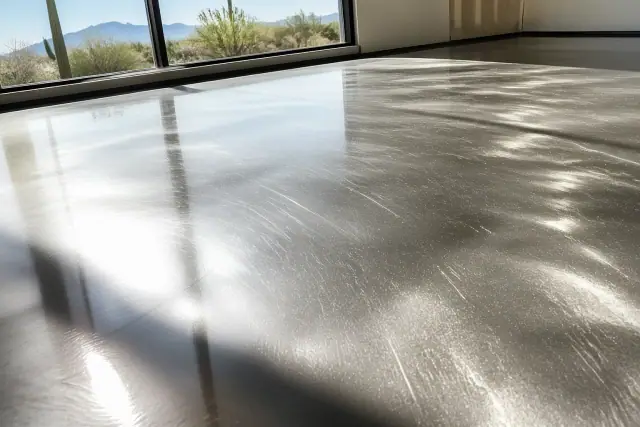
A close view should show how scuffs, gouges, and dropped-tool marks stand out against a smooth, transparent wear layer.
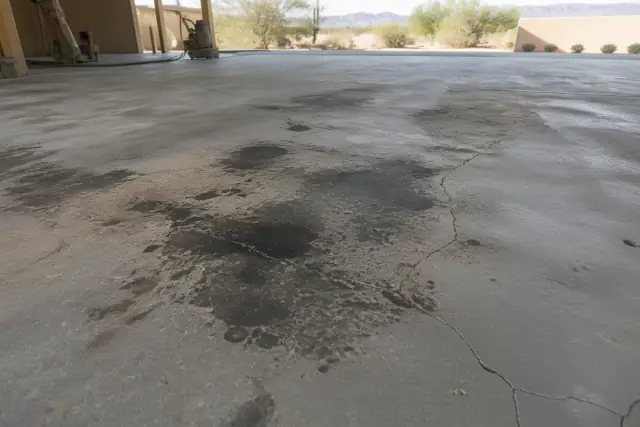
The slab condition matters before coating because moisture, staining, spalling, and cracks can telegraph through a metallic pour.
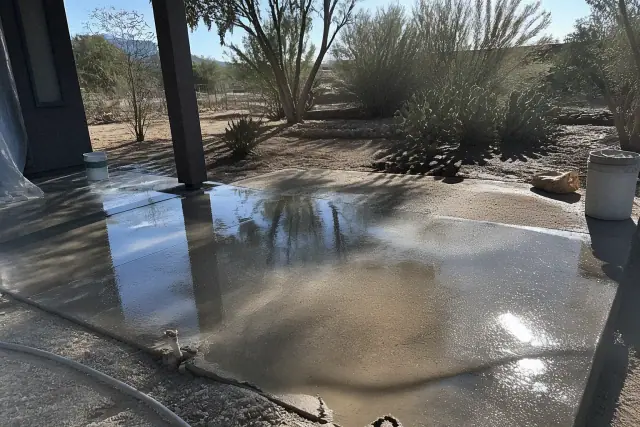
A wet exterior surface makes the slip risk visible and shows why outdoor installations need both traction and UV protection.
Garages, showrooms, retail floors, lobbies, and offices are strong candidates when appearance matters and abrasion stays moderate.
Forklift traffic, loading areas, dragged equipment, and heavy industrial abrasion call for a tougher, more forgiving coating system.
Patios, pool decks, and entryways need a UV-stable polyaspartic topcoat plus a slip-resistant additive for sun, water, and monsoon runoff.
Dust-mop grit, use a pH-neutral cleaner instead of ammonia-based products, and place pads beneath furniture, shelving, and heavy equipment.
| Coating Type | Typical Cost Per Sq Ft | What to Weigh |
|---|---|---|
| Solid-color epoxy | $3 - $7 | A more affordable choice with a uniform finish. |
| Flake epoxy | $5 - $9 | Texture helps disguise everyday wear and debris. |
| Metallic epoxy | $8 - $12 | Higher-cost pigments and skilled hand work create the marbled effect. |
| Polyaspartic topcoat | $6 - $10 | Topcoat selection affects UV stability and the final project price. |
Metallic epoxy suspends pigment powder in a clear or translucent resin and is manipulated during cure to create a marbled, three-dimensional appearance. That clear surface has little color or texture to disguise scuffs, so the same mark looks more obvious than it would on a solid or flake floor. The finish can handle foot traffic and light residential vehicles, but entryways, kitchens, and busy commercial lobbies tend to lose sheen sooner. Prolonged contact with standing water, pool chemicals, or de-icing salts can cause cloudiness and adhesion loss at the edges of an improperly topcoated floor.
Metallic epoxy is unforgiving when the slab is damp, oil-stained, spalled, cracked, or uneven. Proper preparation includes a calcium chloride moisture test and diamond grinding to an ICRI CSP 3 profile before coating; the application itself may involve squeegees, brushes, and a propane torch to release bubbles and shape the effect before the short working window closes. A typical 400 to 500 square foot Tucson garage generally falls between $3,200 and $6,000, depending on concrete condition, repairs, and topcoat choice. Older slabs near Barrio Viejo or Sam Hughes may need added repair or resurfacing when caliche-related cracks or efflorescence are present.
Readers often ask whether metallic epoxy is simply standard epoxy with a different color, whether it works outdoors, and how to keep it looking good. It differs because metallic powders are worked through translucent resin to create a one-of-a-kind pattern, while solid-color and flake systems cure with a more uniform appearance. Indoors, it suits display-focused garages and showrooms; outdoors, it needs a chemical-resistant, UV-stable topcoat and added traction, and it is usually a poor fit for high-moisture bathrooms or heavy industrial floors. Regular sweeping, pH-neutral cleaning, furniture pads, and avoiding dragged equipment help limit visible wear.
Share how the space is used, where water or sunlight reaches the floor, and what condition the concrete is in. A slab assessment can clarify repairs, traction, topcoat needs, and whether metallic epoxy or another coating is the better match before you request a quote.